Loading a flexitank safely and efficiently requires proper container inspection, correct liner installation, controlled filling procedures, and close attention to weight distribution and pressure limits. The process is straightforward when handled by experienced operators, but skipping any preparation step can lead to cargo loss, container damage, or safety incidents. This guide walks through every stage of the process, from pre-loading checks to cargo suitability and a comparison with ISO tank loading.
What equipment and preparation are needed before loading a flexitank?
Before loading a flexitank, you need a structurally sound 20-foot dry container, a compatible flexitank liner, a filling hose assembly, a pump or gravity feed system, and protective boards or foam padding for the container walls. Preparation also includes a full inspection of the container and all fittings before the liner is placed inside.
The container itself is the most critical starting point. It must be free of sharp protrusions, rust holes, residual moisture, and any previous cargo contamination. Even a small nail head or rough weld can puncture the liner under the pressure of a full load. Walk through the interior carefully and cover any identified hazard points with protective padding before proceeding.
On the equipment side, confirm that the flexitank liner is the correct model and capacity for your cargo volume. Flexitank capacities typically range up to 27,000 litres, so matching the liner to your actual fill volume prevents overpressure. Check that all valves, fittings, and hose connections are clean and undamaged. Having a secondary containment plan in place before you start filling is also good practice for any bulk liquid operation.
How is a flexitank installed inside a shipping container?
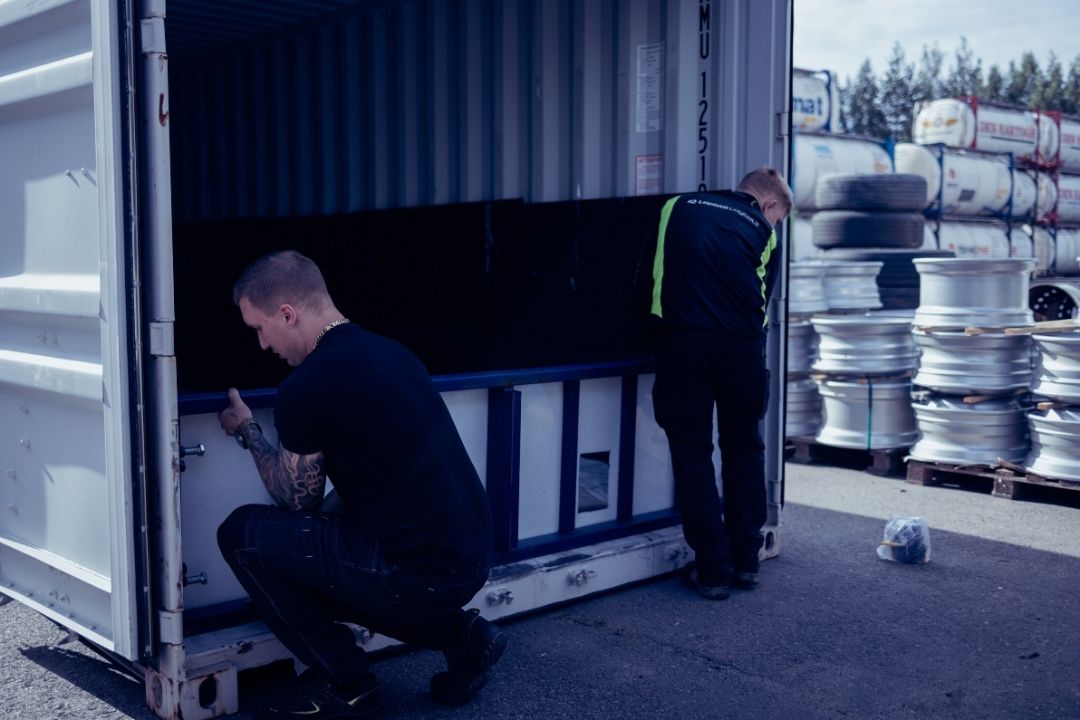
A flexitank is installed by unfolding the liner inside the container, positioning it flush against the rear and side walls, securing the filling valve through the container door opening, and fitting protective boards against the container doors to distribute pressure when the liner is full. The installation typically takes one to two hours with a trained team.
Start by placing the folded liner at the rear of the container and unrolling it toward the door end. The liner should sit centrally on the container floor with no folds or creases trapped underneath, as these can create stress points during filling. Once the liner is positioned, thread the filling and discharge valve through the designated opening in the container door or end panel, depending on the flexitank design.
Door protection boards are not optional. When a flexitank is full, it exerts significant lateral pressure against the container doors. Without adequate reinforcement, doors can bow or fail during transit. Most professional flexitank shipping companies differ from regular freight companies in that they supply purpose-built door protection panels as part of the fitting kit. Ensure these are correctly installed and that the door locking bars engage properly before any filling begins.
What is the correct filling procedure for a flexitank?
The correct filling procedure for a flexitank starts with a slow initial flow to allow the liner to settle and expand evenly, followed by a controlled fill rate that does not exceed the manufacturer’s recommended pressure, and ends with a secure valve closure and a visual inspection of the liner and door boards before sealing the container.
Begin filling at a reduced flow rate for the first few minutes. This allows the liner to conform to the container shape gradually rather than expanding unevenly under sudden pressure. Once the liner has taken shape and you have confirmed there are no leaks at the valve connection, you can increase the flow to the recommended operating rate.
Monitor the fill level continuously. Most flexitank systems do not have automatic cutoffs, so the operator must track volume manually or by weight. Stop filling at the maximum rated capacity for the specific liner. Overfilling is one of the most common causes of flexitank failure and creates a dangerous load that shifts during transport. After filling, close and lock the valve securely, check the door protection boards one final time, and close the container doors.
What cargo types are suitable — and unsuitable — for flexitank transport?
Flexitanks are suitable for non-hazardous bulk liquids including food-grade oils, wine, fruit juices, syrups, liquid fertilisers, non-hazardous chemicals, and industrial liquids. They are not suitable for hazardous goods classified under dangerous goods regulations, high-viscosity products that cannot be pumped, or cargo requiring temperature control beyond the ambient range.
Suitable cargo categories
Food and beverage products are among the most common flexitank cargoes. Edible oils, concentrated juices, wine, molasses, and liquid dairy ingredients all transport well in food-grade flexitank liners. On the industrial side, non-hazardous chemicals such as glycerine, latex, and certain resins are regularly shipped in flexitanks. The key requirement is that the cargo must be liquid enough to pump at ambient temperature and must not react with the liner material.
Unsuitable cargo categories
Flexitanks cannot carry dangerous goods classified under IMO or ADR regulations. This includes flammable liquids, corrosive chemicals, and toxic substances. High-viscosity products that solidify or become unpumpable at ambient temperatures are also poor candidates, as discharge becomes impractical. For hazardous or temperature-sensitive cargo, ISO tank containers are the appropriate solution, offering certified pressure containment and heating coil options.
What safety risks should be managed during flexitank loading?
The main safety risks during flexitank loading are liner puncture from container defects, overfilling leading to pressure failure, valve leaks causing spillage, and improper door board installation resulting in container door failure during transit. Each risk is manageable with proper inspection protocols and trained handling staff.
Liner puncture is best prevented at the container inspection stage. Any sharp surface inside the container that is not padded before liner installation becomes a risk point as the liner expands under fill pressure. This is why the pre-loading inspection is not a formality but a genuine safety step.
Overfilling risk is managed through volume tracking during the fill process. Operators should know the exact rated capacity of the liner being used and stop well within that limit. A liner filled beyond its design capacity is under constant stress and is far more likely to fail during the vibration and movement of sea transport.
Valve integrity is another critical checkpoint. Test the valve connection before filling begins and inspect it again after the liner is pressurised with the initial fill. A loose or damaged valve fitting that leaks under load can cause significant cargo loss and create a hazardous working environment around the container.
How does flexitank loading compare to ISO tank loading?
Flexitank loading is simpler and requires less specialised equipment than ISO tank loading, but it is limited to non-hazardous liquids and single-use applications. ISO tank loading involves connecting to a certified pressure vessel with specific filling and venting procedures, and it supports a far wider range of cargo types including hazardous chemicals, gases, and temperature-sensitive products.
From a practical standpoint, flexitanks offer a lower entry point for bulk liquid shipping. You use a standard dry container, fit the liner, fill it, and ship. There is no tank cleaning between uses, no return logistics for the equipment, and no requirement for a dedicated tank container fleet. For non-hazardous liquid cargo moved in one direction, this makes flexitank shipping services a genuinely cost-efficient option.
ISO tank loading, by contrast, requires connection to a tank container that is owned, maintained, and certified to international pressure vessel standards. The filling process involves controlled top or bottom loading, vent management, and compliance with dangerous goods documentation where applicable. The equipment is reusable across many cycles and supports cargo types that flexitanks simply cannot handle safely.
We operate both flexitank and ISO tank services, which means we can advise on the right solution for each specific cargo type and route rather than defaulting to a single option. For businesses shipping bulk liquids internationally, the choice between the two often comes down to cargo classification, required temperature management, and total volume per shipment. Contact us to handle the operational complexity on both sides so that customers can focus on their supply chain outcomes rather than equipment logistics.
This content was generated with the help of AI — it may contain mistakes