When you need to move large volumes of liquid cargo, the type of logistics provider you choose matters more than most people realise. Not every freight company has the equipment, expertise, or network to handle bulk liquid transport properly. Flexitank shipping companies occupy a specific corner of the logistics world, and understanding what sets them apart helps you make smarter decisions for your supply chain.
This article walks through the most common questions businesses ask when exploring flexitank logistics services—from what these providers actually do to how you can find one you can trust.
What is a flexitank shipping company?
A flexitank shipping company is a logistics provider that specialises in bulk liquid transport using flexible, single-use bladder bags installed inside standard 20-foot shipping containers. These companies handle the full process: sourcing the flexitank, fitting it into the container, coordinating transport, and managing loading and unloading at both ends of the journey.
What separates a dedicated flexitank provider from a general freight forwarder is operational depth. Flexitank logistics requires specific technical knowledge, access to depot networks for fitting and quality control, and partnerships with shipping lines that accept flexitank containers. A general freight company may be able to book a container, but it typically does not have the infrastructure to manage the flexitank itself.
A good flexitank provider also takes responsibility for compliance and cargo safety. That includes selecting the right flexitank specification for your product, ensuring proper installation, and offering recycling programmes for used equipment after delivery.
What types of cargo do flexitank companies handle?
Flexitank companies handle non-hazardous bulk liquids that need to be transported in large volumes without the cost of a dedicated tank container. Common cargo types include food-grade liquids such as edible oils, syrups, and beverage ingredients, as well as industrial liquids and certain chemical products that fall within non-hazardous classifications.
The capacity of a flexitank can reach up to 27,000 litres, making it a practical option for businesses that need to move significant quantities in a single shipment. Because the flexitank sits inside a standard 20-foot container, it travels on regular container shipping routes without requiring specialised equipment at ports or terminals.
It is important to note that flexitanks are not suitable for hazardous materials, gases, or highly viscous products that require heating during transport. For those cargo types, ISO tank containers are the appropriate solution. Knowing which product category your cargo falls into is the first step in choosing the right transport method.
How does flexitank transport work compared to standard freight?
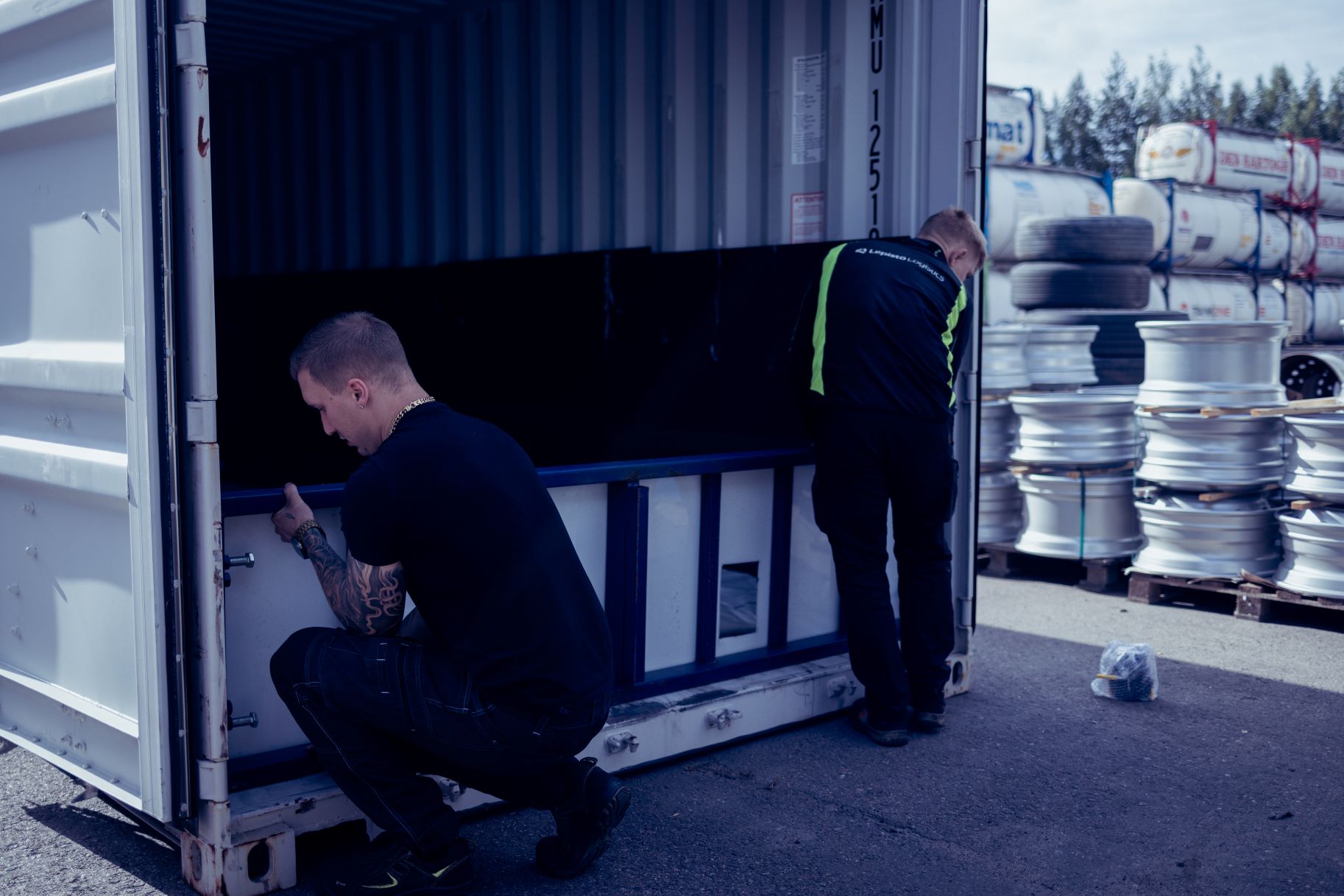
Flexitank transport differs from standard freight in that the container itself becomes a liquid cargo vessel. A flexible bladder is installed inside a standard 20-foot container at a certified depot before loading. The liquid cargo is then pumped directly into the flexitank, the container is sealed, and it moves through the supply chain like any other shipping container.
Standard dry freight uses pallets, boxes, or bags stacked inside a container. Flexitank transport replaces all of that with a single continuous volume of liquid. This means the entire container capacity is used for product, which improves cost efficiency compared with transporting liquids in drums or intermediate bulk containers.
What happens at the destination?
At the destination, the liquid is pumped out of the flexitank, and the used bladder is disposed of or sent for recycling. Because flexitanks are single-use, there is no return logistics for empty equipment, which simplifies the overall operation. A specialist flexitank provider coordinates unloading support, cross-pumping if needed, and recycling of the used flexitank as part of the service.
Does temperature matter?
For some liquid cargo, temperature during storage and transport affects product quality. Specialist flexitank logistics providers offer temperature-controlled storage options and technical assistance to make sure your cargo arrives in the same condition it left. This is something a standard freight forwarder without bulk liquid expertise is unlikely to offer as a standard service.
What’s the difference between flexitank and ISO tank shipping?
The key difference between flexitank and ISO tank shipping is reusability and cargo type. An ISO tank is a permanent, reusable stainless steel container built to international standards, designed for both hazardous and non-hazardous liquids as well as gases. A flexitank is a single-use flexible bladder for non-hazardous liquids only, installed inside a standard dry container for each shipment.
From a customer perspective, the practical differences go beyond the equipment itself. ISO tank transport involves managing a dedicated asset through its full lifecycle: loading, transport, unloading, cleaning, maintenance, and repositioning. This requires a provider with a global tank operation and the infrastructure to handle the container at every stage of the journey.
Flexitank transport is simpler in structure but requires its own expertise. The bladder is installed fresh for each shipment, so there is no cleaning cycle or asset tracking. However, the cargo must be non-hazardous, and the fitting quality is critical to preventing leaks or failures during transit.
For businesses choosing between the two, the decision usually comes down to cargo classification, volume, frequency, and destination. ISO tanks suit hazardous products, gases, and high-heat cargo. Flexitanks suit non-hazardous bulk liquids where cost efficiency and simplicity are priorities.
Why should businesses choose a specialist flexitank provider?
Specialist flexitank providers deliver better outcomes because they have the infrastructure, experience, and partnerships that general freight companies do not. This includes certified depot networks for proper flexitank fitting, established relationships with shipping lines that accept flexitank cargo, and technical teams who understand the specific requirements of bulk liquid transport.
When something goes wrong with a flexitank shipment—whether it is a fitting issue, a temperature concern, or a customs complication—a specialist provider has the knowledge and contacts to resolve it quickly. A general freight forwarder handling a flexitank shipment as a one-off is unlikely to have the same depth of response.
There is also a compliance dimension. Flexitank cargo, even when non-hazardous, requires correct documentation, labelling, and handling procedures. A specialist provider manages this as a standard part of the service, reducing the risk of delays or rejections at ports and borders.
Finally, specialist providers often offer door-to-door solutions that cover inland transport, loading and unloading support, and recycling programmes for used flexitanks. This end-to-end approach means you deal with one partner for the entire shipment rather than coordinating multiple service providers yourself.
How do you find a reliable flexitank shipping company?
To find a reliable flexitank shipping company, look for providers with a demonstrated track record in bulk liquid logistics, a nationwide or regional depot network for flexitank fitting, and transparent service coverage that includes door-to-door transport, technical support, and recycling. Ask directly about their shipping line partnerships and whether they offer temperature-controlled storage options.
A few practical steps help you assess a provider before committing:
- Ask about their depot network and where flexitank fitting takes place
- Confirm that their service covers loading and unloading support, not just container booking
- Check whether they handle customs documentation and labelling as part of the service
- Find out how they manage recycling of used flexitanks after delivery
- Ask about their shipping line partnerships and which routes they actively operate on
It is also worth asking whether the provider works with both flexitanks and ISO tanks. A company with experience across both solutions understands the full spectrum of bulk liquid transport and can give you honest advice about which option suits your cargo, rather than defaulting to the one they happen to sell.
At Transitainer Shipping, we offer flexitank logistics services across Finland and the Nordics, supported by a nationwide depot network and partnerships with reliable shipping lines. Our service covers the full journey, from fitting and inland transport to unloading support and recycling, so you can focus on your business while we handle the complexity of bulk liquid transport. If you are ready to find the right bulk liquid solution for your cargo, get in touch with our team and we will be happy to help.