Moving bulk liquids across borders involves more than just finding a container and booking a shipment. The cargo type, volume, route, and destination all shape which logistics solution actually makes sense for your business. If you work with non-hazardous bulk liquids and you’re weighing your options, this guide walks you through the most relevant solutions available today.
Whether you’re sourcing food-grade ingredients, transporting industrial fluids, or managing regular import and export flows, understanding your choices helps you make faster, better-informed decisions. Let’s go through the most common questions shippers ask when planning bulk liquid transport.
What is non-hazardous bulk liquid cargo?
Non-hazardous bulk liquid cargo refers to large volumes of liquid goods that do not pose a significant risk to health, safety, or the environment during transport. Common examples include food-grade oils, syrups, beverages, non-hazardous chemicals, and industrial fluids. These cargoes can typically be transported without the strict regulatory requirements that apply to hazardous materials.
The distinction matters a great deal in logistics planning. Non-hazardous bulk liquids open up a wider range of transport options, including flexitanks, which are not approved for dangerous goods. Understanding your cargo classification early in the planning process helps you identify the right equipment, the right documentation, and the right logistics partner for the job.
What logistics solutions are available for bulk liquid transport?
The main logistics solutions for bulk liquid transport are flexitanks, ISO tank containers, and intermodal transport combinations. Each option suits different cargo types, volumes, and route requirements. For non-hazardous liquids, flexitanks offer a cost-effective choice, while ISO tanks provide a more versatile solution for a broader range of cargo, including chemicals and gases.
Choosing between these solutions depends on factors like cargo classification, required capacity, frequency of shipments, and whether the route involves multiple transport modes. Door-to-door bulk cargo logistics services typically combine sea freight with inland trucking and terminal handling to deliver cargo from origin to final destination without the shipper needing to coordinate each leg separately.
- Flexitanks: Single-use or multi-use flexible bladders fitted inside standard 20-foot containers, suited for non-hazardous bulk liquids
- ISO tank containers: Reusable stainless steel tanks for liquids, gases, and chemicals, including hazardous cargo
- Intermodal combinations: Sea, road, and rail transport linked together for door-to-door delivery
What is a flexitank and when should it be used?
A flexitank is a large flexible bladder installed inside a standard 20-foot dry container, designed to carry bulk non-hazardous liquids. A flexitank can hold up to 27,000 litres of liquid cargo. It is best used when you need a cost-efficient, single-use transport solution for non-hazardous liquids such as food-grade oils, beverages, or industrial fluids.
Flexitanks work particularly well for shippers who do not have the volume or frequency to justify the use of a dedicated ISO tank but still need to move significant quantities of liquid in one shipment. Because they fit inside a standard dry container, flexitanks can move through regular container shipping networks without requiring specialised equipment at every port.
What services typically come with flexitank transport?
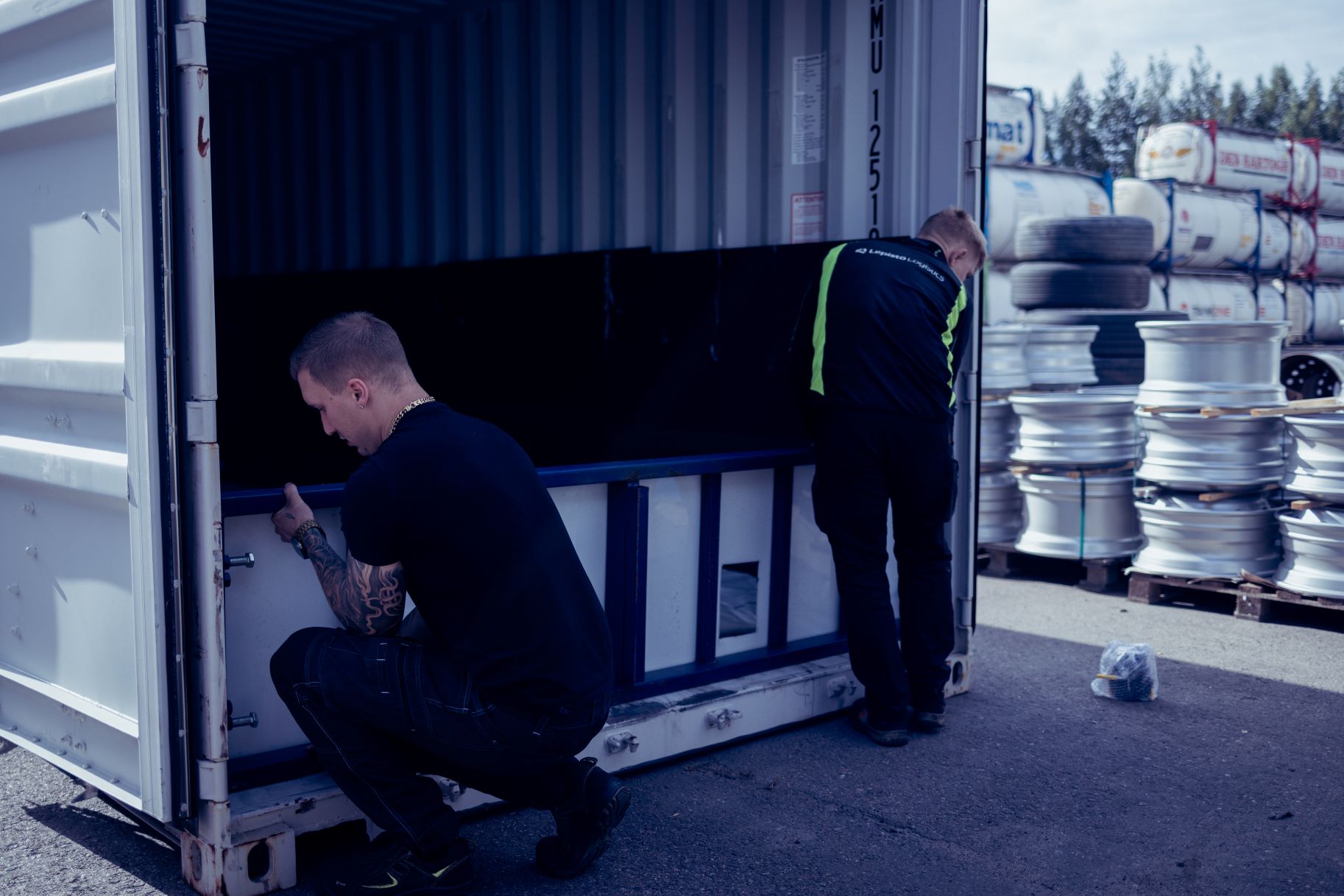
A complete flexitank logistics service usually covers more than just the bladder itself. Useful services to look for include fitting support at depots, loading and unloading assistance, temperature-controlled storage where needed, cross-pumping capabilities, inland transport, and recycling programmes for used flexitanks. These additional services reduce the operational burden on your team and help ensure the cargo arrives in good condition.
What’s the difference between a flexitank and an ISO tank for liquid cargo?
The key difference is that a flexitank is a disposable or limited-use bladder suited only for non-hazardous liquids, while an ISO tank is a reusable stainless steel container that can handle a much wider range of cargo, including chemicals, gases, food-grade products, and high-temperature materials. ISO tanks are owned and operated by logistics providers, while flexitanks are typically fitted for each individual shipment.
From a customer perspective, the practical differences come down to cargo compatibility, cost structure, and operational flexibility. Flexitanks offer a lower entry cost for non-hazardous liquid shipments, making them attractive for food and beverage companies or industrial shippers with straightforward cargo. ISO tanks, on the other hand, provide a more comprehensive solution for complex or sensitive cargo that requires regular cleaning, maintenance, and certification.
How does the service model differ between the two?
With ISO tank containers, the logistics provider typically manages the entire equipment lifecycle, including cleaning, maintenance, documentation, and repositioning. This means you do not need to worry about sourcing equipment, tracking tank availability, or managing logistics across different legs of the journey. The provider operates the tanks globally, which gives you access to flexible routing and consistent service quality without building your own equipment base.
Flexitank transport operates differently. The bladder is fitted at a depot, travels with the cargo, and is then disposed of or recycled after use. This makes flexitanks a practical choice for one-off or less frequent shipments where the overhead of managing reusable equipment does not make sense.
How does intermodal transport work for bulk liquid shipments?
Intermodal transport for bulk liquid shipments combines two or more transport modes, typically sea freight, road trucking, and sometimes rail, within a single logistics chain. The cargo stays in the same container or tank throughout the journey, which reduces handling, lowers the risk of contamination, and speeds up transit times. This approach supports door-to-door delivery from the point of origin to the final destination.
For bulk liquid shippers, intermodal solutions are particularly relevant when cargo moves between ports and inland facilities. A shipment might arrive by deep-sea vessel, transfer to a road truck for inland delivery, and connect to a terminal for final handling, all coordinated under one logistics arrangement. This removes the need for the shipper to manage separate contracts and handovers at each stage.
Intermodal transport also supports cost-effective flexitank transport solutions and tank container transport in the Baltic and Nordic regions, where road connections to ports are strong and container shipping networks are well established. Working with a provider that has local expertise in these markets helps avoid delays and ensures smooth customs clearance at each border.
How do you choose the right bulk liquid logistics solution?
Choosing the right bulk liquid logistics solution starts with four questions: Is your cargo hazardous or non-hazardous? What volume do you need to move per shipment? How frequently do you ship? And what does your route look like? The answers narrow your options quickly and point you towards either a flexitank, an ISO tank, or a combination of both, depending on the shipment.
If your cargo is non-hazardous and you need a straightforward, cost-efficient option for a standard 20-foot container, a flexitank is worth considering. If your cargo includes chemicals, gases, or temperature-sensitive materials, or if you ship regularly on complex routes, an ISO tank with full-service management is likely the better fit. For businesses that ship both types of cargo, working with a provider that handles both solutions means you can standardise your logistics partner while tailoring the equipment to each shipment.
What factors matter most in the decision?
- Cargo classification: Hazardous cargo requires ISO tanks; non-hazardous cargo can use flexitanks or ISO tanks
- Volume per shipment: Flexitanks hold up to 27,000 litres; ISO tanks vary in size and can be matched to your volume needs
- Shipment frequency: Regular, high-volume shippers benefit from a managed ISO tank service; occasional shippers may prefer the flexibility of flexitanks
- Route complexity: Multi-leg or cross-border routes benefit from a provider with intermodal capability and local expertise
- Support requirements: Consider whether you need cleaning, documentation, customs clearance, or depot services included
At Transitainer Shipping, we offer both flexitank logistics and ISO tank container transport as part of our door-to-door bulk cargo logistics services. We operate tank containers globally, which means you do not need to manage equipment availability or coordinate separate logistics legs yourself. Whether you need cost-effective flexitank transport solutions for non-hazardous liquids or full-service ISO tank operations across the Nordics, Baltics, and beyond, we handle the entire chain, from fitting and loading to documentation and delivery. If you’re ready to simplify your bulk liquid logistics, reach out to our team and we’ll help you find the right solution for your cargo.
This content was generated with the help of AI — it may contain mistakes