When you’re moving bulk cargo across borders, the difference between a smooth delivery and a logistical headache often comes down to how well the process is coordinated from start to finish. Door-to-door bulk cargo logistics services take that coordination off your plate entirely, giving you a single point of contact and a seamless flow from the moment the cargo leaves the origin facility to the moment it arrives at its destination. Whether you’re shipping chemicals in ISO tanks, non-hazardous liquids in flexitanks, or dry commodities in liner-bag containers, understanding how this model works helps you make smarter decisions for your supply chain.
This article walks you through the most common questions about door-to-door bulk cargo logistics, from what it actually means in practice to how you can choose the right provider for your needs.
What is door-to-door bulk cargo logistics?
Door-to-door bulk cargo logistics is a service model in which a single logistics provider manages the entire transport journey for bulk goods, from the point of origin to the final destination. This includes inland transport, terminal handling, ocean or intermodal freight, customs clearance, documentation, and final delivery—all coordinated under one contract and with one responsible party.
The “bulk” element refers to cargo that is transported in large, unpackaged quantities, typically in specialized equipment such as ISO tank containers, flexitanks, or bulk and silo containers. Rather than shipping in individual boxes or pallets, bulk cargo moves as a single mass, which requires specific handling expertise and purpose-built transport solutions.
What makes the door-to-door model particularly useful for bulk cargo is that this type of freight is rarely straightforward. Liquid cargo needs to be pumped, gas cargo requires pressure management, and dry bulk needs to be transferred into silos or storage systems at the receiving end. Coordinating all of that across multiple carriers and service providers creates risk. A door-to-door provider reduces that risk by managing the entire chain.
How does door-to-door bulk cargo logistics work?
Door-to-door bulk cargo logistics works by combining inland transport, port handling, ocean or intermodal freight, and last-mile delivery into a single managed process. The provider plans the route, books the equipment, arranges customs documentation, coordinates terminal operations, and delivers the cargo to the final address, all without requiring you to manage individual steps.
The typical flow of a door-to-door bulk shipment
A shipment generally follows this sequence:
- The logistics provider assesses your cargo type, volume, and destination to select the right equipment and route.
- Inland transport collects the cargo from your facility or depot using specialized trucks or tipping chassis.
- The cargo is loaded into the appropriate container, whether an ISO tank, flexitank, or liner-bag container.
- The container moves through terminal handling, where documentation, labeling, and any required inspections take place.
- The shipment travels via ocean freight or intermodal transport to the destination country.
- Customs clearance is handled at the receiving port.
- Final inland delivery brings the cargo to the destination facility, including unloading support such as pumping, cross-pumping, or container-to-silo transfer.
Throughout this process, the provider tracks the shipment and handles any issues that arise, so you receive updates rather than problems to solve.
What types of bulk cargo can be shipped door to door?
Door-to-door bulk cargo logistics services cover three main cargo categories: liquid and gas cargo in ISO tank containers, non-hazardous bulk liquids in flexitanks, and dry bulk commodities in liner-bag, standard bulk, or silo containers. Each category requires different equipment, handling procedures, and technical expertise.
Liquid and gas cargo
ISO tank containers are used for chemicals, food-grade liquids, high-heat cargo, and gases. These are robust, internationally standardized containers that can handle both hazardous and non-hazardous liquid cargo. Because ISO tanks are operated on a global scale, you don’t need to worry about scheduled routes or managing the equipment yourself. The provider handles positioning, cleaning, maintenance, and repositioning as part of the bulk cargo logistics service.
Non-hazardous bulk liquids
Flexitanks offer a cost-effective alternative for non-hazardous liquids such as food oils, syrups, and similar products. A flexitank is a large, flexible bladder installed inside a standard 20-foot shipping container, with a capacity of up to 27,000 litres. This makes it a practical and cost-efficient transport solution for shippers who need volume without the overhead of dedicated tank equipment. Services typically include fitting, loading and unloading support, temperature-controlled storage, and recycling of used flexitanks.
Dry bulk commodities
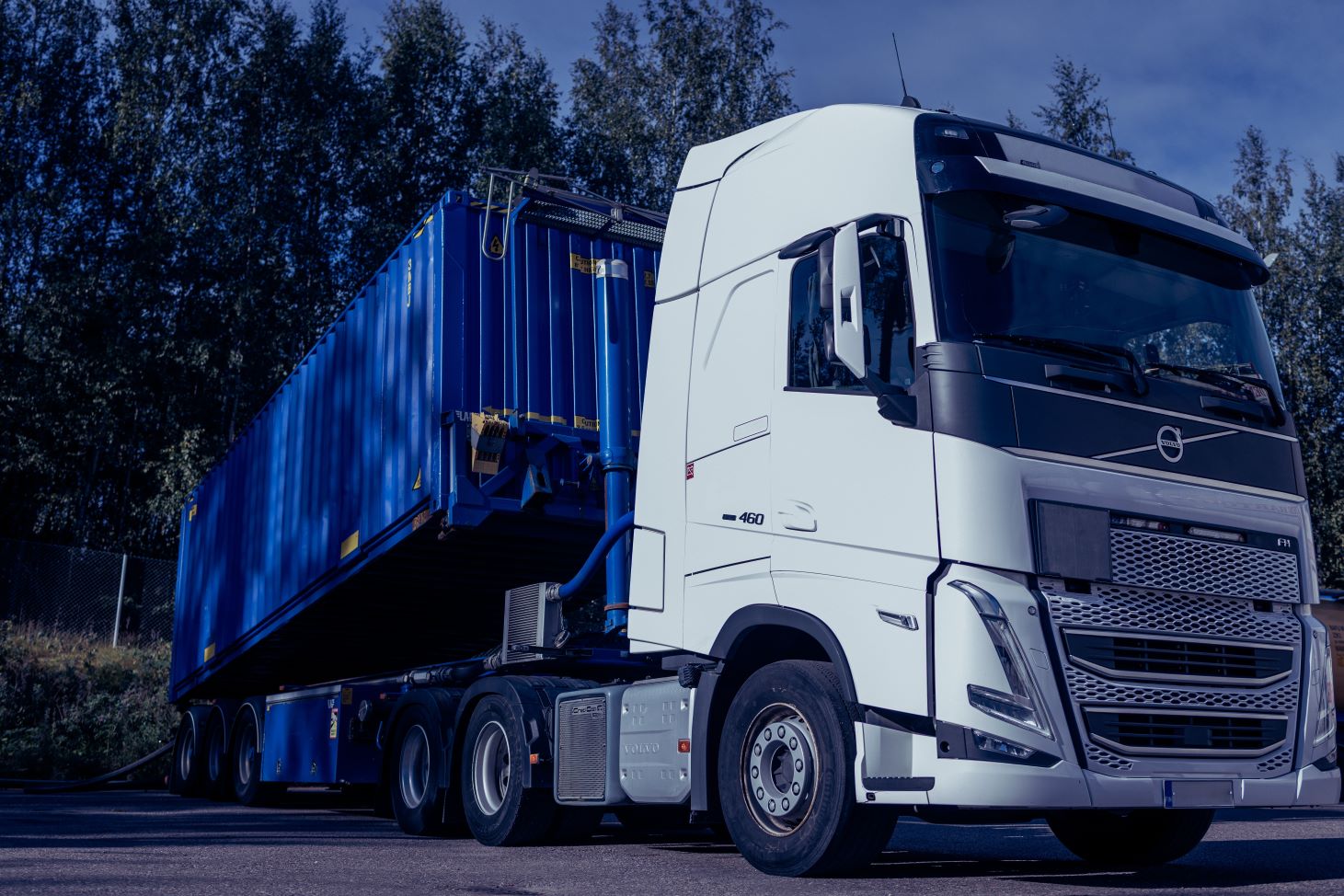
Dry bulk cargo transport services cover granules, powders, and similar materials in the chemical, agricultural, and food sectors. Specialized liner bags protect the cargo inside standard containers, while tipping chassis, rotary valve systems, and container-to-silo transfers enable efficient delivery at the receiving end.
What’s the difference between door-to-door and port-to-port bulk shipping?
The key difference is the scope of responsibility. Port-to-port shipping covers only the ocean leg, from the origin port to the destination port. Door-to-door shipping covers the entire journey, including inland collection, terminal handling, customs, and final delivery. With port-to-port shipping, you arrange and manage the legs before and after the ocean freight yourself.
For bulk cargo, this distinction matters more than it does for standard containerized goods. Bulk cargo often requires specialized equipment at both ends: pumping systems for liquids, tipping vehicles for dry bulk, or silo connections for powder cargo. If you’re using port-to-port shipping, you need to source and coordinate all of that yourself, which means managing multiple service providers, separate contracts, and potential gaps in accountability.
Door-to-door shipping consolidates all of that under one provider. If something goes wrong at any point in the chain, there is one party responsible for resolving it. For complex, technically demanding bulk shipments, that single point of accountability is a significant operational advantage.
What are the main challenges in door-to-door bulk cargo transport?
The main challenges in door-to-door bulk cargo transport include equipment availability, route complexity, regulatory compliance across multiple countries, and the technical demands of handling specialized cargo at both ends of the journey. Each of these can cause delays or cost increases if not managed proactively.
Equipment and route complexity
Bulk cargo often requires purpose-built equipment that isn’t universally available. ISO tanks need to be positioned, cleaned, and maintained between uses. Flexitanks require proper fitting to avoid leaks or failures. Dry bulk containers need compatible unloading infrastructure at the destination. A provider with a strong equipment base and global network can manage these variables more effectively than one relying on third-party sourcing at short notice.
Customs and documentation
Cross-border bulk cargo shipments involve detailed documentation, including cargo declarations, safety data sheets for hazardous materials, and import and export customs filings. Errors or delays in documentation can hold up an entire shipment. Working with a provider that handles customs clearance in-house reduces this risk significantly.
Technical handling at origin and destination
Unlike standard freight, bulk cargo often requires active handling at both ends. Loading a flexitank requires trained personnel and the right pumping equipment. Container-to-silo transfers for dry bulk need compatible connections and timing coordination with the receiving facility. These are not tasks you can hand off to a general haulier without specific experience.
How do you choose the right door-to-door bulk logistics provider?
To choose the right door-to-door bulk logistics provider, look for a company with direct experience in your cargo type, a strong equipment base, in-house customs handling, and a proven network in the regions you ship to and from. A provider that operates its own equipment, rather than simply brokering it, can deliver more consistent quality and faster problem resolution.
Here are the practical criteria worth evaluating:
- Cargo-specific expertise: Does the provider have direct experience with your cargo type, whether liquid, gas, or dry bulk? Ask about its handling procedures and equipment standards.
- Equipment ownership and management: Providers that operate their own ISO tanks or maintain their own depot networks for flexitanks can respond faster and maintain higher quality standards.
- Geographic coverage: Make sure the provider has established operations in the regions relevant to your trade lanes, particularly if you’re shipping to or from the Nordics or the Baltics.
- Customs and documentation capability: In-house customs clearance reduces the risk of documentation errors and delays at the border.
- End-to-end services: Confirm that the provider genuinely manages the full chain, including inland transport, terminal handling, and last-mile delivery, rather than subcontracting large portions without oversight.
- Recycling and sustainability: If environmental standards matter to your business, ask whether the provider has recycling programs for used flexitanks or other bulk packaging materials.
The right provider acts as an extension of your logistics team, not just a carrier. You want someone who understands the technical demands of your cargo, communicates proactively, and takes ownership of the full journey.
At Transitainer Shipping, we offer exactly this kind of end-to-end approach for bulk cargo moving to, from, and through the Nordics and the Baltics. We operate ISO tank containers globally, manage flexitank logistics across Finland through a nationwide depot network, and provide tailored dry bulk transport solutions for food-grade and chemical commodities. Our in-house customs and freight forwarding team handles the documentation, so you don’t have to coordinate across multiple parties. If you’re ready to simplify your bulk cargo operations, reach out to our logistics team to discuss your specific requirements—we’d be glad to help.