Many businesses assume tank container transport only makes sense for large volumes. If you’re shipping smaller quantities of bulk liquids, you might wonder whether this type of logistics is practical or cost effective for your needs.
The reality is more nuanced than you might think. Tank container logistics has evolved to serve a wide range of shipment sizes, and what counts as “small volume” in bulk liquid transport often surprises people. The right transport solution depends on your specific cargo requirements, not just the volume you’re moving.
This article breaks down what small volume actually means in bulk liquid transport services, how tank container transport services handle smaller quantities, and when different solutions make the most sense for your operations.
What counts as a small volume shipment
In bulk liquid transport, small volume typically refers to shipments that fit within a single transport unit rather than requiring multiple containers or dedicated tanker trucks. This puts the upper range at around 27,000 litres, which is the maximum capacity for a flexitank.
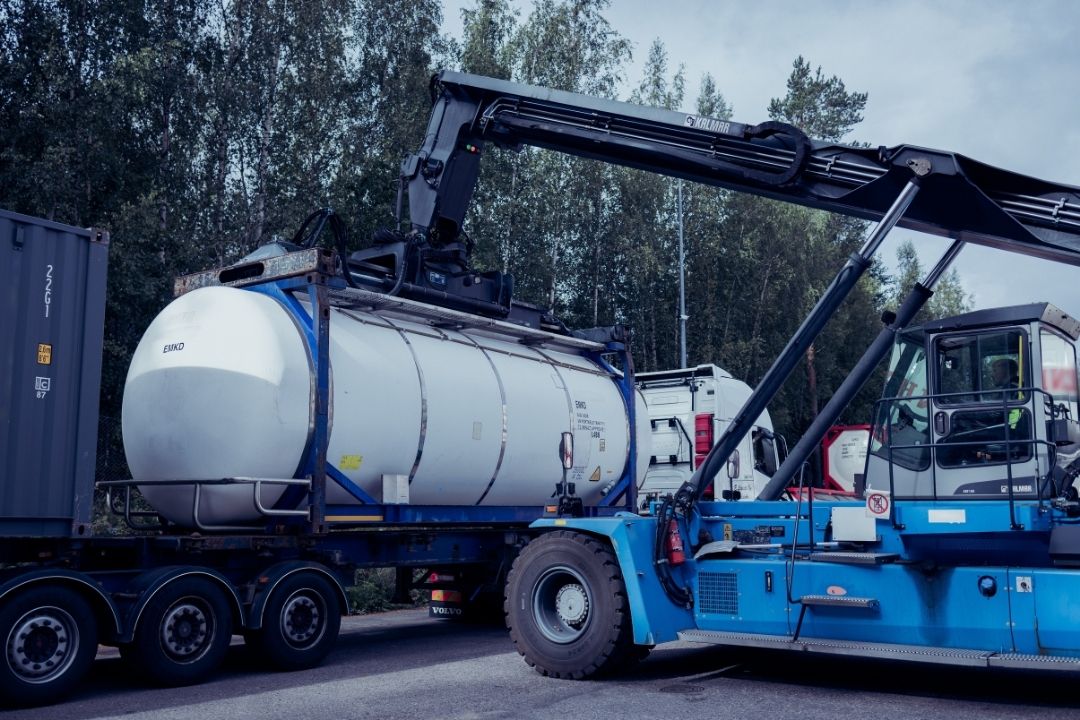
ISO tank containers generally hold between 21,000 and 26,000 litres depending on the specific tank type and cargo requirements. Anything below these capacities still qualifies as small volume in the context of bulk liquid transport services.
Understanding where your shipment size sits within this spectrum helps you evaluate which transport solution fits your operational needs. A 15,000 litre shipment of food grade oil and a 24,000 litre shipment of industrial chemicals both fall into the small volume category, but they might require different approaches based on the cargo characteristics rather than just the quantity.
The important distinction is that small volume doesn’t mean limited options. Both flexitanks and ISO tanks are designed to handle these quantities efficiently, and the global scale of tank container logistics means you’re not restricted to local or regional transport routes.
How tank containers work for smaller quantities
Tank container transport services for smaller volumes operate quite differently from what many businesses expect. When you work with a company that operates tank containers on a global scale, you don’t need to worry about scheduled routes or managing logistics yourself.
This operational model provides end-to-end handling of your bulk liquid shipments, covering everything from loading and transport to documentation and delivery. The service includes intermodal and deep sea transport services, as well as local operations that handle trucking, terminal work, and technical support.
Both flexitanks and ISO tanks suit different cargo requirements. Flexitanks work well for non hazardous liquids and offer a cost efficient solution with capacities up to 27,000 litres. ISO tanks handle a broader range of cargo types, including chemicals, food grade products, high heat cargo, and gases.
The practical advantage for you is that these solutions offer flexibility, reliability, and scalability without requiring you to maintain your own equipment or logistics infrastructure. Companies that manage tanks themselves ensure consistent quality, optimise transport routes, and adapt quickly to specific operational needs.
Cost factors that actually matter for small shipments
Pricing for small volume bulk liquid transport connects directly to the comprehensive service model rather than just the physical movement of goods. When companies operate globally with their own equipment, costs reflect the full scope of handling, documentation, technical expertise, and logistics coordination.
Transport route optimisation plays a significant role in cost efficiency. Global networks allow for better planning and utilisation of equipment, which benefits smaller shipments that might otherwise face premium pricing due to their size.
The transparency in pricing comes from understanding what you’re actually paying for. This includes door to door delivery, loading and unloading support, temperature controlled storage when needed, technical assistance, and proper handling throughout the journey. For food grade cargo, you’re also paying for hygienic standards and appropriate cleaning between uses.
Companies with nationwide depot networks and strong partnerships with shipping lines can provide more competitive rates because they manage the entire logistics chain. This integrated approach means costs align with the comprehensive service provided rather than being inflated by multiple intermediaries.
When flexitanks make more sense than ISO tanks
Flexitanks suit non hazardous liquid cargo particularly well when you need a cost efficient solution. With capacities up to 27,000 litres, they work for food grade liquids, oils, and other products that don’t require specialised handling for hazardous materials.
ISO tanks offer broader applicability across cargo types. They handle chemicals, gases, high heat products, and food grade liquids. If your cargo requires temperature control, specialised handling, or falls into hazardous categories, ISO tanks provide the technical specifications and safety features you need.
The choice between the two often comes down to your specific cargo characteristics and operational requirements. Flexitanks provide good value for straightforward liquid transport with simpler handling needs. ISO tanks deliver the reliability and technical capability for more demanding cargo types.
Both solutions offer scalability as your volumes change. Companies that work with both flexitanks and ISO tanks can recommend the most appropriate option based on what you’re actually shipping rather than pushing a single solution for all situations.
Common concerns about tank transport for small volumes
Many businesses worry about minimum volume requirements. The reality is that tank container transport services accommodate shipments across the full capacity range of the equipment. A partially filled tank doesn’t automatically disqualify you from using this transport method.
Logistics complexity concerns often stem from assumptions about needing to manage routes, schedules, and coordination yourself. When you work with a company that operates globally, they handle the complexity. You get door to door service without managing the individual logistics steps.
Quality consistency matters, particularly for food grade or sensitive cargo. Companies that manage their own equipment and have established cleaning, maintenance, and handling procedures maintain consistent standards across shipments. This includes proper documentation, labelling, and technical support throughout the process.
Adaptability to specific operational needs is another common question. Tank container logistics providers with technical expertise and flexible service models can accommodate special requirements, whether that involves temperature control, specific loading procedures, or coordinated delivery timing.
The concern about being too small for professional bulk liquid transport services usually disappears once you understand how the industry actually operates. Global scale operations, comprehensive service models, and equipment designed for these volume ranges mean small shipments receive the same professional handling as larger ones.
At Transitainer Shipping, we operate tank containers globally and work with both flexitanks and ISO tanks to suit different cargo requirements. Our services cover the Nordics, Baltics, and worldwide destinations, providing end to end handling that includes transport, documentation, technical support, and customs clearance. Whether you’re shipping food grade liquids, chemicals, or dry bulk commodities, we adapt our approach to your specific operational needs while keeping costs transparent and aligned with the comprehensive service we provide. Contact us to discuss your requirements.