Choosing the right flexitank comes down to two core factors: what product you are shipping and the route it will travel. A flexitank designed for food-grade vegetable oil behaves very differently from one used for industrial chemicals, and a short European road leg demands different specifications than a deep-sea container journey from Asia. This article walks through the key questions every shipper should answer before committing to a flexitank solution.
What products are suitable for flexitank transport?
Flexitanks are best suited for non-hazardous bulk liquids that do not require pressurised containment. This includes food-grade products such as vegetable oils, fruit juices, wine, and liquid sweeteners, as well as industrial liquids like lubricants, latex, glycerin, and certain resins. The cargo must be pumpable, non-corrosive, and classified as non-dangerous goods under international transport regulations.
The suitability check goes beyond the chemical classification. Viscosity matters because highly viscous products may require heating during unloading. Density affects how close the loaded flexitank comes to the container’s maximum payload limit. Sensitivity to contamination is also a deciding factor, particularly for food and beverage producers who need guaranteed food-grade liner materials and a clean-fill process.
Products that are not suitable for flexitank transport include hazardous chemicals classified under the IMDG Code, corrosive acids, flammable liquids, and any cargo requiring temperature maintenance throughout the entire voyage. For those categories, an ISO tank container is the appropriate solution.
What are the different types of flexitanks available?
Flexitanks are broadly divided by the number of layers in their construction and the material used, which together determine the cargo compatibility, pressure tolerance, and reusability of the unit. Most commercial flexitanks are single-use, multi-layer polyethylene bladders fitted inside a standard 20-foot dry container, but the specification varies depending on the application.
- Standard flexitanks: Multi-layer polyethylene construction suitable for most non-hazardous industrial liquids. Capacity typically ranges from around 16,000 to 24,000 litres.
- Food-grade flexitanks: Manufactured with FDA-approved inner liners to meet food safety standards. Used for edible oils, juices, dairy products, and liquid ingredients.
- High-capacity flexitanks: Engineered to hold up to 27,000 litres, maximising the payload of a single 20-foot container. Suitable for lower-density liquids where weight limits are not the binding constraint.
- Heating flexitanks: Fitted with external heating pads or designed to accommodate steam heating to assist with viscous cargo during discharge.
Choosing between these types requires a clear product specification sheet. The liner material, number of layers, valve type, and capacity rating should all be matched to the cargo before a flexitank is fitted. To learn more about how do flexitank shipping companies differ from regular freight companies, understanding the equipment options available is a useful starting point.
How does the transport route affect which flexitank to choose?
The transport route directly influences the mechanical stress a flexitank will experience, and therefore the construction grade required. A deep-sea voyage covering multiple weeks, transhipments, and varying sea states demands a more robust multi-layer design than a short road haul within Europe. Rough handling at ports, stacking forces, and temperature fluctuations during transit all affect the integrity of the bladder.
Road-only routes within a single country or region are generally lower risk. The container does not experience the sustained dynamic movement of ocean freight, and handling points are fewer. However, road transport introduces its own risks, particularly sharp braking and cornering, which place lateral pressure on the flexitank and the container end walls.
For intermodal routes combining sea and road legs, the flexitank specification should be based on the most demanding segment of the journey. If the shipment crosses an ocean before being trucked inland, the ocean-grade specification applies to the entire move. Route planning also affects valve positioning, as some discharge locations have fixed pump connections that require a specific valve configuration.
What’s the difference between a flexitank and an ISO tank for bulk liquids?
The key distinction is that a flexitank is a disposable or single-use liner fitted inside a standard dry container, while an ISO tank is a permanent stainless steel pressure vessel mounted on a reusable frame. This difference in construction drives significant differences in cost structure, cargo suitability, and operational flexibility for the shipper.
Flexitanks offer a lower entry cost per shipment and eliminate the need to return empty equipment, which makes them attractive for one-directional trade lanes and seasonal volumes. They are ideal for non-hazardous liquids where the simplicity of a standard container network can be leveraged. However, they cannot carry hazardous, pressurised, or temperature-sensitive cargo that requires a fully enclosed, cleanable steel vessel.
ISO tanks, by contrast, are suited for a much wider range of cargo, including chemicals, gases, and food-grade liquids requiring strict hygiene control between loads. We operate ISO tank containers globally, which means our customers do not need to manage equipment availability, regular shipping lines, or the logistics of repositioning empty tanks themselves. This fully managed bulk liquid shipping service is a meaningful operational advantage for businesses that ship complex or high-value bulk liquids across multiple markets.
For many shippers, the choice is not either-or. Flexitanks work well for established, high-volume non-hazardous lanes, while ISO tanks cover the more demanding or regulated cargo categories within the same supply chain.
What container specifications are required for flexitank use?
A flexitank must be fitted inside a 20-foot standard dry container that meets specific structural and condition requirements. The container must be in good structural condition, free from corrosion, sharp protrusions, or damage to the floor and walls. Any internal defect that could puncture or abrade the bladder during transit is a disqualifying factor.
The container must also have functioning and properly sealed doors, as the flexitank is loaded and discharged through the door end. Most flexitank providers require a pre-fit container inspection to confirm suitability. Key specification points include:
- Container type: 20-foot standard dry (GP) only. High-cube containers are generally not recommended due to the risk of the bladder overextending vertically.
- Payload capacity: The container must support the gross weight of the loaded flexitank, which at full capacity can approach or exceed 25,000 kg depending on the liquid density.
- Interior condition: No rust, nails, splinters, or chemical residues from previous cargo.
- Door seal integrity: Watertight seals are essential to prevent moisture ingress that could affect certain cargo types.
Containers that have previously carried hazardous goods, strong-smelling cargo, or incompatible chemicals may not be approved for food-grade flexitank use, even if they appear structurally sound.
What are the most common flexitank loading and unloading mistakes?
The most common flexitank failures trace back to errors at the loading and unloading stage rather than product or equipment incompatibility. Overfilling is the most frequent loading mistake. Exceeding the rated capacity of the flexitank creates excessive pressure on the seams and end walls of the container, increasing the risk of rupture during transit. Always fill to the manufacturer’s specified maximum, not the container’s theoretical volume.
Other loading mistakes include:
- Inadequate container inspection: Fitting a flexitank into a container with hidden internal damage or contamination from previous cargo.
- Incorrect valve positioning: Installing the discharge valve at the wrong height or angle for the pump equipment available at the destination.
- Air entrapment: Failing to purge air from the bladder before or during filling, which can cause pressure imbalances and affect the integrity of the seams.
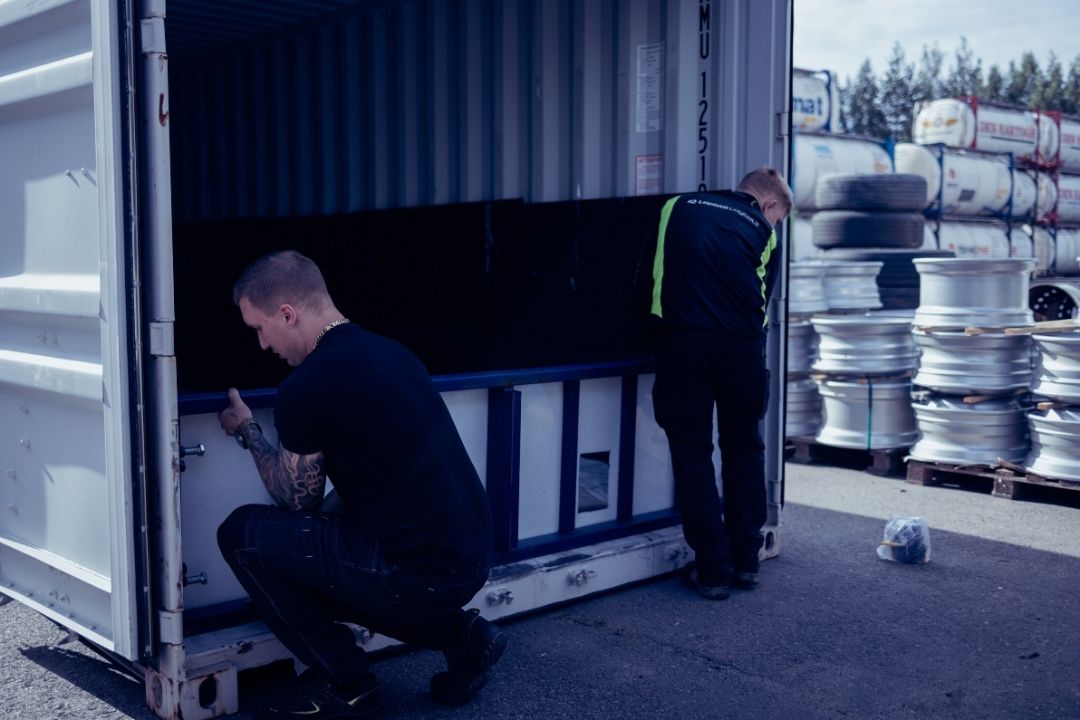
- Improper baffling: Not securing protective boards or baffles against the container end walls, leaving the bladder exposed to direct contact with the door hardware.
At the unloading end, the most common error is incomplete discharge. Attempting to pump out the final residual liquid without tilting the container or using a suction wand results in significant product loss. For viscous cargo, insufficient heating before discharge is a frequent cause of incomplete emptying and extended unloading times.
Working with an experienced flexitank logistics provider who offers on-site fitting supervision and discharge support significantly reduces the risk of these operational errors. Proper training for the personnel handling the container at both ends of the route is equally important and should be confirmed before the first shipment moves. If you have specific requirements or need tailored advice, contact us to discuss your flexitank shipping needs.