Moving dry bulk commodities from a shipping container directly into a storage silo is one of the most efficient methods for handling granular and powdered materials at their destination. Whether you are managing food-grade ingredients, chemical granules, or agricultural products, understanding how this process works helps you plan your supply chain more effectively and avoid costly handling errors.
This article walks you through the full picture of container-to-silo transfer, from what the process actually involves to the equipment used, the challenges to anticipate, and why intermodal transport makes sense for dry bulk cargo logistics. If you are evaluating your options for dry bulk cargo transport services, these answers will give you a solid foundation.
What is container-to-silo transfer in dry bulk logistics?
Container-to-silo transfer is the process of unloading dry bulk commodities directly from a shipping container into a fixed or mobile storage silo at the destination facility. It eliminates intermediate handling steps by connecting the transport container to the silo system, allowing the cargo to flow from one to the other without being exposed to the open environment or repackaged along the way.
This method is particularly common in industries where bulk materials arrive in large quantities and need to feed directly into a production or storage process. Instead of unloading into bags or intermediate containers, the material moves in a continuous, enclosed transfer. This protects product quality, reduces labour requirements, and speeds up turnaround time at the receiving facility.
In practical terms, the transfer connects the container’s discharge outlet to the silo’s intake system, using gravity, pneumatic pressure, or mechanical conveyance to move the material. The specific method depends on the material’s properties and the silo’s infrastructure.
How does the container-to-silo transfer process work step by step?
The container-to-silo transfer process begins with positioning the container at the unloading point, connecting the discharge system to the silo intake, and then transferring the material using gravity flow, pneumatic conveying, or a rotary valve system. The container is typically elevated or tilted using a tipping chassis to assist material flow, and the transfer continues until the container is fully discharged.
Step-by-step breakdown of the transfer
- Container positioning: The container arrives by road on a tipping chassis or is placed at the unloading station. Tipping chassis allow the container to be angled, using gravity to assist the discharge of materials that do not flow freely on their own.
- Connection to the silo intake: The container’s discharge outlet is connected to the silo’s receiving point. This connection must be secure and dust-tight to prevent material loss and contamination.
- Material transfer: Depending on the setup, material flows by gravity, is pushed by pneumatic pressure, or is drawn through a rotary valve system. Rotary valve systems, also known as SDU (silo discharge unit) deliveries, are commonly used for fine powders and granules that require controlled flow rates.
- Monitoring and completion: The transfer is monitored to ensure consistent flow and to detect any blockages. Once the container is empty, the connection is sealed, and the container is removed for cleaning or return.
Each step requires attention to the material’s specific characteristics, such as particle size, moisture sensitivity, and flowability, because these factors directly affect which transfer method works best and how the process should be managed on site.
What types of dry bulk commodities are suitable for silo transfer?
Dry bulk commodities suitable for container-to-silo transfer include granules, powders, and other free-flowing or semi-free-flowing materials such as chemical granules, food-grade ingredients, plastic pellets, fertilisers, and agricultural products. The material must be in a form that can be discharged from a container outlet and conveyed into a silo without significant clumping or bridging.
Food-grade applications are particularly common. Ingredients like flour, starch, sugar, and powdered additives all lend themselves well to silo transfer because they need to move directly into production without exposure to contaminants. For these applications, food-grade liner bags inside the container protect the product during transport and maintain hygiene standards throughout the transfer.
On the chemical and industrial side, granular polymers, resin pellets, and powdered minerals are regularly handled this way. These materials benefit from the enclosed transfer process because it reduces dust emissions and limits operator exposure to potentially hazardous substances.
Materials that are highly cohesive, sticky, or prone to moisture absorption may require additional equipment or conditioning before transfer. If a material tends to bridge at discharge points or pack under its own weight, the transfer setup needs to account for this through aeration pads, vibration, or modified discharge geometry.
What equipment is used in a container-to-silo transfer?
The main equipment used in a container-to-silo transfer includes tipping chassis for container elevation, rotary valve systems for controlled discharge, pneumatic conveying lines, dust filters at the silo vent, and flexible connectors between the container outlet and the silo intake. The specific combination depends on the material type and the receiving facility’s infrastructure.
Tipping chassis
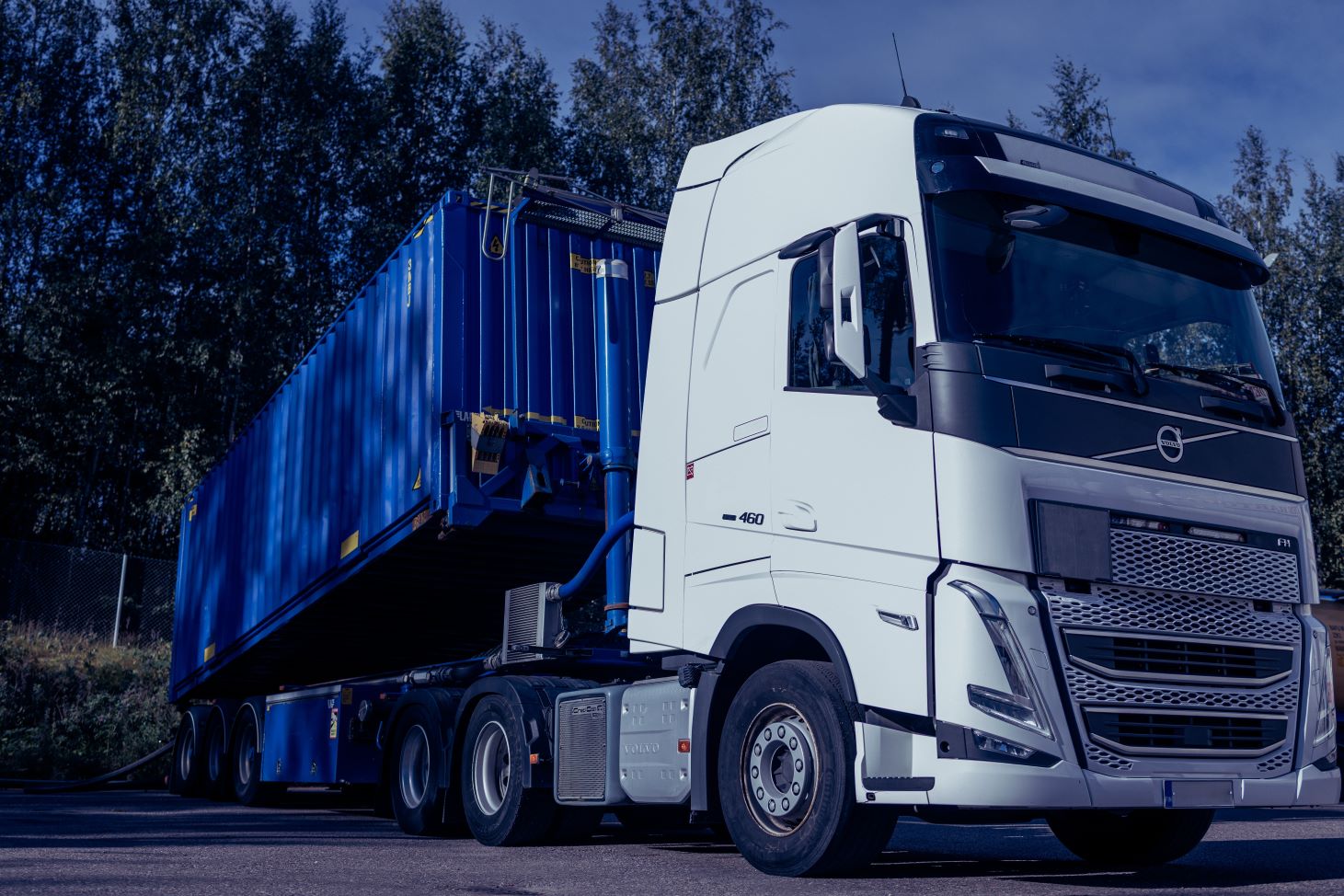
A tipping chassis is a road trailer that can hydraulically tilt the container to an angle, encouraging gravity-assisted discharge. This is especially useful for materials that do not flow freely on their own. The container sits on the chassis frame, and the angle can be adjusted to suit the material’s flow characteristics.
Rotary valve and SDU systems
Rotary valve systems control the rate at which material exits the container and enters the conveying line. They are commonly used in SDU deliveries, where a controlled, metered flow is needed to prevent overloading the pneumatic line or the silo itself. This equipment gives operators precise control over the transfer rate.
Pneumatic conveying lines and dust management
Pneumatic conveying uses pressurised air to carry material through a pipeline from the container to the silo. At the silo end, a dust filter or vent filter captures fine particles displaced by the incoming air, preventing dust from escaping into the atmosphere. Proper dust management is both a safety requirement and an environmental consideration.
Liner bags
For food-grade and chemical granule transport, high-quality liner bags inside the container protect the product from contamination during the voyage. These liners are fitted inside standard, bulk, or silo containers and are designed to be discharged cleanly during the silo transfer process.
What are the main challenges in dry bulk silo transfer operations?
The main challenges in dry bulk silo transfer operations include material bridging at discharge points, dust generation during transfer, contamination risk when handling food-grade or sensitive materials, and ensuring compatibility between the container’s discharge system and the receiving silo’s infrastructure. Each of these challenges requires planning and the right equipment to manage effectively.
Material bridging occurs when a bulk product forms an arch or blockage at the container outlet, interrupting flow. This is more common with cohesive powders or materials that have absorbed moisture during transport. Vibration devices, aeration pads, or simply adjusting the tipping angle can resolve most bridging issues, but they need to be anticipated before the transfer begins.
Dust control is another important consideration, particularly for fine powders. Without proper sealing at connection points and adequate filtration at the silo vent, fine particles can escape into the surrounding environment. This creates both a health and safety concern for workers and a potential regulatory issue, especially when handling chemical materials.
For food-grade products, contamination prevention is paramount. The container, liner bag, and all contact surfaces must meet hygiene standards. Any residue from a previous cargo can compromise the product, which is why cleaning and documentation of container history are important parts of the pre-transfer process.
Finally, infrastructure compatibility matters. Not every receiving facility is set up for every type of transfer. If a silo’s intake system is not compatible with the container’s discharge outlet, additional adapters or equipment may be needed, which adds time and cost to the operation.
Why choose intermodal container transport for dry bulk commodities?
Intermodal container transport is a practical choice for dry bulk commodities because it combines the flexibility of road transport with the efficiency and scale of sea freight, allowing cargo to move door to door without being repackaged at each stage. This reduces handling, lowers the risk of product damage or contamination, and simplifies the logistics chain for both importers and exporters.
For businesses shipping dry bulk materials across borders or between continents, intermodal solutions offer a reliable way to connect production sites with receiving facilities without the complexity of managing multiple transport modes separately. The container serves as the consistent unit throughout the journey, from the point of loading to the silo at the destination.
Cost efficiency is another strong argument. Using standard containers for dry bulk transport, fitted with liner bags or configured as bulk containers, allows shippers to access competitive sea freight rates while maintaining the product integrity that specialised cargo demands. This makes intermodal transport a useful option for businesses that need to balance cost with quality.
From a supply chain management perspective, intermodal transport also simplifies customs clearance and documentation. A single container moving through multiple transport modes under one logistics arrangement is easier to track, document, and clear through customs than cargo that changes packaging or mode at every border.
At Transitainer Shipping, we provide tailored dry bulk cargo transport services that cover the full journey, including door-to-door delivery via standard, bulk, and silo containers; flexible inland transport with tipping chassis; SDU deliveries via rotary valve systems; and container-to-silo transfers. We also support recycling solutions and bring technical expertise to every shipment, backed by a trusted partner network across the Nordics, the Baltics, and beyond. If you are ready to streamline your dry bulk logistics from origin to silo, reach out to our team and we will help you build a solution that fits your operation.