Flexitanks are safe for transporting non-hazardous bulk liquids when used correctly, with the right cargo, and under proper installation procedures. Safety depends heavily on cargo compatibility, certified equipment, and trained handling throughout the supply chain. The sections below address the most common questions shippers ask before choosing flexitank logistics.
What types of cargo are flexitanks approved to carry?
Flexitanks are approved for non-hazardous bulk liquid cargo only. This includes food-grade liquids such as edible oils, syrups, fruit juices, wine, and dairy derivatives, as well as non-hazardous industrial liquids like latex, glycerin, lubricants, and certain resins. Flexitanks are not approved for hazardous chemicals, flammable substances, or gases under any circumstances.
The distinction between hazardous and non-hazardous cargo is the most fundamental safety boundary in flexitank logistics. Regulatory frameworks, including those aligned with the Container Owners Association (COA) guidelines, clearly prohibit the use of flexitanks for dangerous goods. This is not a matter of preference but a hard operational and legal limit.
Within the approved cargo range, compatibility must still be verified. Factors such as liquid viscosity, temperature sensitivity, and chemical reactivity with the flexitank material all affect whether a specific product is suitable. Food-grade shipments require flexitanks manufactured from food-safe polyethylene, while industrial liquids may use slightly different liner specifications. Confirming cargo suitability before booking is a non-negotiable step in responsible flexitank shipping and logistics services.
What are the main risks associated with flexitank transport?
The main risks in flexitank transport are leakage, rupture, and cargo contamination. These risks are not inherent to the technology itself but arise from improper cargo selection, poor installation, container damage, or rough handling during transit. When managed correctly, flexitank container services have a strong safety record across global supply chains.
Leakage is the most commonly cited concern. It typically results from a puncture in the liner, a failed valve connection, or overfilling beyond the flexitank’s rated capacity. A standard flexitank can hold up to 24,000 liters, with some high-capacity models reaching up to 27,000 liters. Exceeding these limits puts direct stress on the liner and significantly increases rupture risk.
Container condition is another critical factor. A flexitank relies on the structural integrity of the 20-foot dry container it is fitted into. Containers with internal protrusions, sharp edges, or weakened floors can damage the liner even when the flexitank itself is perfectly installed. Inspecting the container before fitting is a standard requirement in professional flexitank logistics operations.
Cargo shift during sea or road transport can also create pressure imbalances. Proper baffling, correct valve positioning, and ensuring the container doors are secured with appropriate protection all reduce this risk. Working with experienced flexitank providers who understand intermodal transport dynamics makes a measurable difference in incident rates.
What safety standards and certifications govern flexitank use?
Flexitank safety is governed primarily by the Container Owners Association (COA) Code of Practice, which sets minimum standards for flexitank design, testing, installation, and use. Reputable flexitank manufacturers also pursue ISO 9001 quality management certification, and individual flexitank products are subject to pressure and drop testing to verify structural integrity before they reach the market.
The COA Code of Practice is the most widely referenced industry standard globally. It covers approved cargo categories, installation procedures, container requirements, and filling limits. Shippers working with flexitank providers who follow COA guidelines benefit from a consistent and auditable safety framework that aligns with the expectations of flexitank shipping companies versus regular freight companies and major shipping lines.
Beyond product certification, the shipping lines that carry flexitank-loaded containers maintain their own approved product lists. Not all flexitank brands are accepted by all carriers. Working with a logistics partner who has established relationships with approved carriers is therefore part of the safety equation, not just the commercial one. We work with reliable shipping lines whose requirements align with the quality standards our clients expect.
How does proper installation prevent flexitank failures?
Proper installation is the single most important factor in preventing flexitank failures. A correctly installed flexitank is positioned evenly within the container, filled to the approved capacity, fitted with a secure valve assembly, and protected at the door end with a bulkhead board. Errors at any of these points are the leading cause of in-transit incidents.
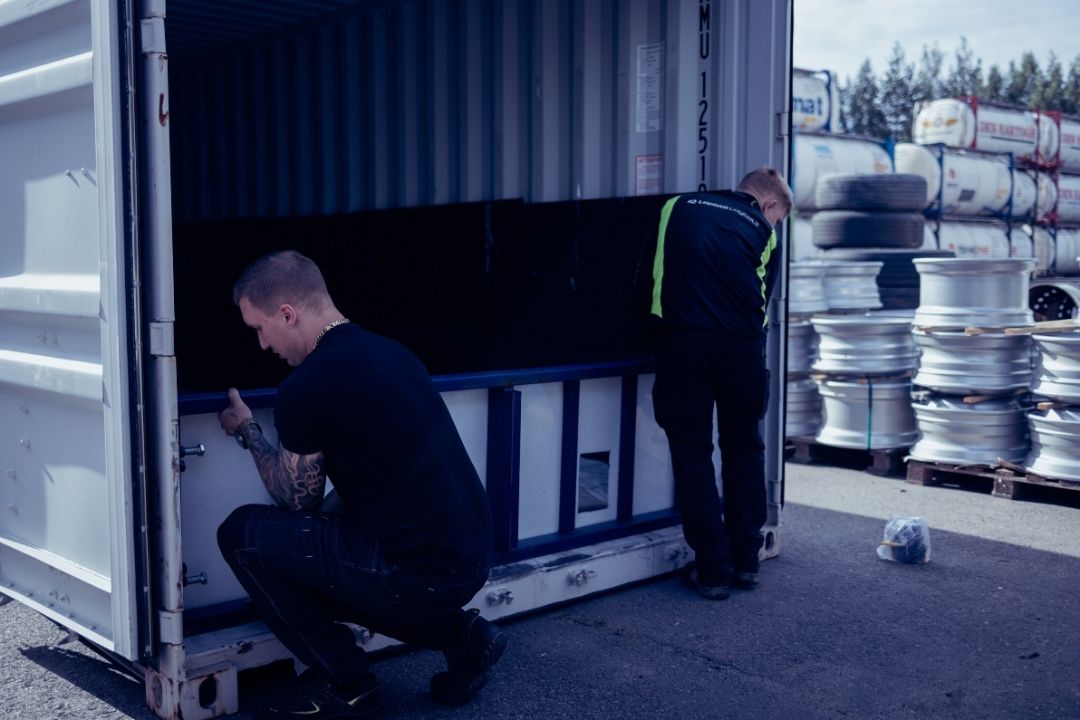
Installation must be carried out by trained technicians at a qualified depot. The process begins with a thorough container inspection to identify any internal hazards. The flexitank is then laid flat, the liner is unfolded without creasing, and the valve is fitted through the container door before filling begins. Rushing or skipping any of these steps introduces risk that no amount of cargo insurance can fully offset.
Temperature management during installation also matters for certain cargoes. Liquids that are filled at elevated temperatures can expand during transit as conditions change, creating pressure on the liner walls. Experienced flexitank logistics operators account for this by adjusting fill levels and recommending appropriate liner specifications for heat-sensitive products.
At Transitainer, we provide professional flexitank fitting through a nationwide depot network in Finland, with technical support available throughout the loading and unloading process. This hands-on involvement at the installation stage is where many potential failures are caught and prevented before a container ever leaves the yard.
How do flexitanks compare to ISO tanks in terms of safety?
ISO tanks and flexitanks serve different cargo profiles, and each has a distinct safety framework. ISO tanks are reusable stainless steel pressure vessels approved for both hazardous and non-hazardous liquids, including chemicals and gases. Flexitanks are single-use liners designed exclusively for non-hazardous liquids. For approved cargo types, both options can be operated safely when handled by qualified logistics service providers.
ISO tanks carry a more robust regulatory structure because they handle a broader and more dangerous range of cargo. They must comply with international standards such as the IMDG Code for dangerous goods, undergo regular inspection cycles, and be cleaned and certified between uses. This makes them the required choice for hazardous chemicals, food-grade products with strict hygiene traceability requirements, and gases.
Flexitanks offer a different kind of safety advantage for their approved cargo range. Because they are single-use, there is no cross-contamination risk from previous cargo. For food-grade liquids or sensitive non-hazardous products, this is a meaningful operational benefit. The trade-off is that flexitanks require correct installation every time, whereas an ISO tank’s safety properties are largely built into the equipment itself.
From a client perspective, the choice between the two is not just technical. ISO tank operations involve managing equipment availability, cleaning schedules, and depot logistics across global networks. We operate ISO tanks globally, which means our clients do not need to manage these complexities themselves. The right choice depends on cargo type, volume, route, and the level of operational support available from the provider.
When should a shipper choose a flexitank over other bulk options?
A shipper should choose a flexitank when transporting non-hazardous bulk liquids in volumes between 14,000 and 27,000 liters, where cost efficiency and flexibility are priorities. Flexitanks are particularly well suited for food-grade liquids, agricultural products, and industrial non-hazardous fluids on routes where ISO tank availability or cleaning logistics would add cost and complexity.
The cost argument for flexitanks is straightforward. A standard 20-foot dry container fitted with a flexitank typically costs less to ship than an equivalent ISO tank movement on the same route. There are no cleaning fees, no depot repositioning costs, and no equipment availability constraints tied to a global tank fleet. For shippers with predictable, high-volume non-hazardous liquid flows, this can represent a significant saving over time.
Flexibility is the other key advantage. Flexitanks can be fitted at depots close to the cargo origin, loaded into standard dry containers, and shipped on virtually any deep-sea or short-sea service. This makes them accessible on routes where ISO tank infrastructure is limited or where the shipper does not have an established relationship with a tank container operator.
However, a flexitank is not the right choice if the cargo is classified as hazardous, if the shipment requires temperature control beyond what passive insulation can provide, or if the shipper needs a reusable solution for frequent, high-value movements. In those cases, ISO tank transport is the appropriate and often required alternative. Understanding which solution fits the cargo is exactly the kind of guidance that experienced flexitank logistics partners provide before a booking is confirmed. Contact us to discuss which bulk liquid solution best fits your cargo and route requirements.