Shipping goods internationally involves more decisions than just choosing a carrier and booking a container. One of the first and most important choices you face is whether your cargo moves as packed goods or as bulk cargo. Getting this right affects your costs, your documentation, your handling requirements, and ultimately how smoothly your supply chain runs.
If you work with liquids, gases, granules, or powders, understanding the difference between these two freight categories helps you make better logistics decisions from the start. This article walks you through the fundamentals, the key differences, and the practical considerations that matter most for businesses shipping bulk cargo internationally.
What are packed goods and bulk cargo in freight forwarding?
Packed goods are products transported in individual units such as boxes, pallets, drums, or bags that are counted, labeled, and handled as separate items. Bulk cargo, by contrast, is transported as an undivided mass without individual packaging, moving as a continuous volume of liquid, gas, or loose solid material directly within a container or vessel.
In freight forwarding, this distinction shapes nearly every aspect of how a shipment is planned and executed. Packed goods follow standardized handling procedures that work across most cargo types. Bulk cargo requires specialized equipment, different documentation, and often specific technical expertise to load, transport, and unload safely. The two categories do not share the same infrastructure, which is why logistics providers specializing in bulk cargo often specialize in one or the other.
What are the main types of bulk cargo in shipping?
Bulk cargo in shipping falls into three primary categories: liquid bulk, gas bulk, and dry bulk. Liquid bulk includes chemicals, food-grade oils, syrups, and other flowable substances. Gas bulk covers pressurized gases transported in specialized containers. Dry bulk refers to loose solid materials such as granules, powders, and agricultural or chemical commodities.
Liquid and gas bulk
Liquid and gas bulk cargo typically moves in ISO tank containers or flexitanks, depending on the nature of the cargo. ISO tanks are rigid, reusable stainless steel containers suited for a wide range of liquids and gases, including hazardous and high-temperature cargo. Flexitanks are single-use flexible bladders fitted inside a standard 20-foot container, designed for non-hazardous liquids. A flexitank can hold up to 27,000 litres, making it a high-capacity option for bulk liquid shipments that do not require the structural strength of an ISO tank.
Dry bulk
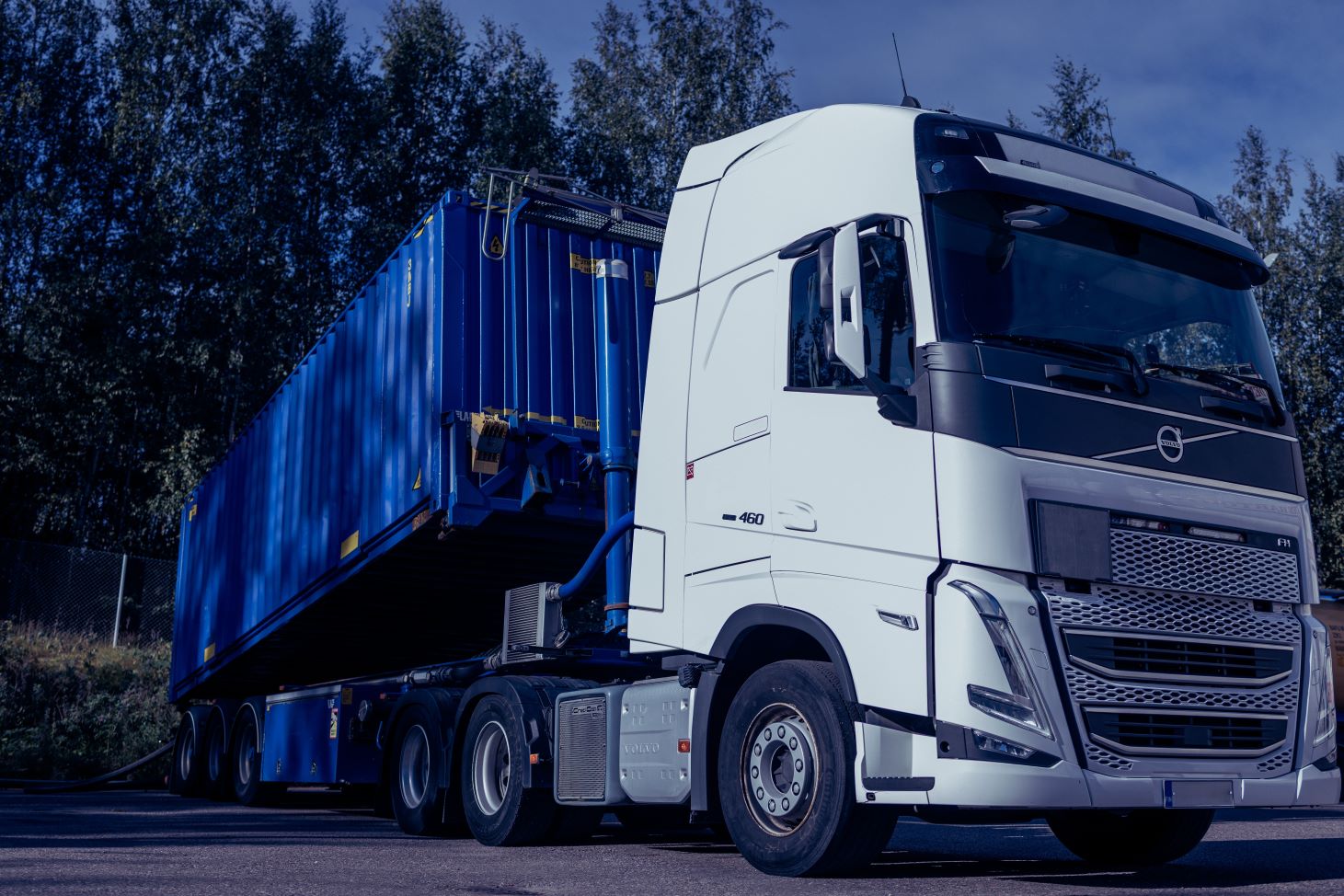
Dry bulk cargo includes materials such as chemical granules, food-grade powders, and agricultural products. These move in bulk containers, silo containers, or standard containers fitted with liner bags. Specialized handling methods such as tipping chassis, rotary valve systems, and container-to-silo transfers are often used to load and unload dry bulk efficiently without contamination or product loss.
What is the difference between packed goods and bulk cargo?
The core difference between packed goods and bulk cargo is how the product is contained and handled during transport. Packed goods maintain their individual packaging throughout the journey and can be sorted, counted, and tracked as units. Bulk cargo moves as a continuous mass and requires specialized containers, equipment, and procedures to load, transport, and discharge.
This difference has practical implications across several dimensions. Packed goods are generally more flexible from a logistics standpoint since they can move through standard warehousing and distribution networks. Bulk cargo, however, often achieves significantly better cost efficiency per unit volume because it eliminates the cost of individual packaging and allows a container to be filled to its maximum capacity. The trade-off is that bulk cargo demands more technical planning, specific container types, and partners who understand the cargo’s physical and chemical properties.
Documentation also differs. Bulk cargo, particularly hazardous liquids and gases, requires additional compliance documentation, labeling, and, in some cases, special permits. Packed goods follow standard freight documentation procedures that most logistics providers handle routinely.
When should a company choose bulk cargo transport over packed goods?
A company should consider bulk cargo transport when it ships large, consistent volumes of liquid, gas, or loose solid materials where individual packaging adds cost without adding value. If your product is a homogeneous substance that can be pumped, poured, or pneumatically transferred, bulk transport is almost always more cost-effective at scale.
The decision also depends on your cargo type. Food-grade liquids such as oils and syrups, industrial chemicals, gases, and dry commodities such as granules or powders are natural candidates for bulk transport. If your product requires careful separation from other units, individual labeling for end consumers, or fragile packaging that cannot withstand bulk handling, packed goods remain the better choice.
Volume consistency matters too. Bulk logistics works best when you have regular, predictable shipment volumes. Irregular or small-volume shipments can reduce the cost advantages of bulk transport, since specialized equipment and handling still carry fixed costs regardless of fill level. If you ship regularly and in sufficient volume, cost-effective flexitank transport solutions or ISO tank logistics can deliver meaningful savings compared to drumming or bottling your product for packed freight.
How does freight forwarding work differently for bulk cargo?
Freight forwarding for bulk cargo differs from packed goods forwarding primarily in equipment selection, technical coordination, and compliance management. A bulk cargo freight forwarder must match the cargo to the right container type, arrange specialized loading and unloading equipment, coordinate cleaning and maintenance of containers between uses, and manage cargo-specific documentation and labeling requirements.
Equipment and operational planning
For liquid bulk, this means selecting between ISO tanks and flexitanks based on cargo properties, temperature requirements, and hazard classification. For dry bulk cargo transport services, it means choosing between liner bags, bulk containers, or silo containers and planning discharge methods at the destination. Unlike packed goods, where the container is largely interchangeable, the container in bulk logistics is part of the product handling system.
Documentation and compliance
Bulk cargo, especially chemicals and gases, requires detailed safety documentation, proper labeling under international regulations, and, in some cases, pre-approval from carriers or port authorities. A freight forwarder with genuine bulk cargo expertise handles these requirements proactively rather than reactively, which reduces delays and avoids costly compliance errors at customs or at the port.
Door-to-door bulk cargo logistics services go further than standard freight forwarding by covering the full chain from loading at origin to discharge and delivery at destination, including all intermediate handling, documentation, and customs clearance. This end-to-end approach is particularly valuable for bulk cargo because the number of handoff points where errors can occur is higher than with packed goods.
What are the most common mistakes when shipping bulk cargo internationally?
The most common mistakes when shipping bulk cargo internationally include choosing the wrong container type for the cargo, underestimating documentation requirements, neglecting container cleanliness standards, and failing to plan for discharge infrastructure at the destination. Each of these mistakes can cause delays, cargo damage, or compliance failures that are costly to resolve.
- Wrong container selection: Using a flexitank for a hazardous liquid or for cargo that requires temperature control is a serious error. Each bulk container type has specific cargo compatibility requirements, and mismatches create safety and quality risks.
- Incomplete documentation: Bulk cargo, particularly chemicals and gases, requires precise documentation, including material safety data sheets, proper UN numbers, and carrier-specific declarations. Missing or incorrect documents can result in shipments being held at customs or refused by carriers.
- Ignoring container cleanliness: For food-grade or sensitive cargo, the cleaning history of an ISO tank or the condition of a liner bag directly affects product quality. Skipping verification of cleaning and inspection records is a risk that experienced shippers never take.
- No discharge plan at destination: Bulk cargo cannot simply be unloaded like pallets. If the receiving facility lacks the right pumping, tipping, or pneumatic transfer equipment, the shipment may arrive but cannot be discharged efficiently. Confirming discharge capability before booking is a basic step that is often overlooked.
- Underestimating transit time for specialized equipment: Bulk containers, especially ISO tanks, are not always available on every trade lane at every moment. Booking without confirming equipment availability leads to last-minute problems that disrupt production schedules.
Avoiding these mistakes comes down to working with a logistics partner who understands bulk cargo from the inside, not just as a booking category. Technical knowledge, equipment access, and hands-on operational experience make a real difference when things need to go right the first time.
At Transitainer Shipping, we specialize in exactly this kind of logistics. We handle tank container transport across the Nordics, the Baltics, and globally, operate flexitank logistics with a nationwide depot network in Finland, and provide tailored dry bulk cargo transport services for food-grade and chemical commodities. We manage the full chain from documentation and customs clearance to loading, transport, and discharge, so you can focus on your business rather than the complexity of bulk freight.
Ready to simplify your bulk freight operations? Reach out to our bulk cargo team and let us help you find the right solution for your cargo and supply chain.