Shipping bulk cargo across borders, through ports, and over long distances involves more moving parts than most people expect. Whether you’re transporting chemicals, food-grade liquids, or dry commodities, understanding how intermodal bulk cargo logistics actually work in the Nordic and Baltic region can help you make better decisions, reduce costs, and avoid surprises along the way.
This article walks you through the fundamentals of intermodal bulk transport, the equipment options available, and what makes the Nordic-Baltic corridor a practical choice for businesses moving goods globally.
What is intermodal bulk cargo transport?
Intermodal bulk cargo transport is the movement of large quantities of liquid, gas, or dry goods using two or more transport modes, such as sea, road, and rail, within a single, coordinated logistics chain. The cargo stays in the same container unit throughout the journey, which reduces handling, lowers the risk of damage, and simplifies documentation.
The word “intermodal” refers to the combination of transport modes rather than a single method. A shipment might travel by truck from a production facility to a port, then by deep-sea vessel to another country, and finally by road to the final destination. What makes this efficient is that the container itself does not change—only the vehicle carrying it does.
For bulk cargo specifically, this approach works particularly well because the containers used, such as ISO tank containers and flexitanks fitted inside standard dry containers, are designed to handle the physical demands of multiple transport legs without compromising cargo integrity.
What types of bulk cargo can be transported intermodally?
Intermodal transport supports three main categories of bulk cargo: liquid cargo, gas cargo, and dry bulk commodities. Liquid cargo includes chemicals, food-grade products such as oils and syrups, and beverages. Gas cargo requires pressurised tank containers. Dry bulk covers granules, powders, and other loose solid materials used in chemical, agricultural, and food production.
Each cargo type has specific requirements that influence which container solution is appropriate:
- Liquid chemicals and hazardous substances require ISO tank containers with certified materials and pressure ratings.
- Food-grade liquids need containers that meet hygiene standards and, in some cases, temperature control.
- Non-hazardous bulk liquids such as non-dangerous industrial fluids or certain food ingredients can be transported using flexitanks.
- Dry bulk commodities such as granules and powders travel in liner bags or silo containers, depending on the delivery method required.
The range of cargo types that can move intermodally is broad, which is one reason why this bulk cargo logistics service model appeals to so many different industries, from chemical manufacturing to food processing.
How does intermodal bulk transport work step by step?
Intermodal bulk transport follows a structured sequence from cargo origin to final destination. The process begins with selecting the right container, moves through loading, inland transport to port, sea freight, port handling at destination, and ends with final delivery to the customer’s facility or storage point.
Here is a practical breakdown of the key stages:
- Container selection and preparation: The right container type is chosen based on cargo properties, volume, and destination. This includes cleaning, inspection, and any required labelling or documentation preparation before loading.
- Loading at origin: Liquid cargo is pumped into the tank or flexitank. Dry bulk is loaded using liner bags or directly into silo containers. Proper sealing and documentation are completed at this stage.
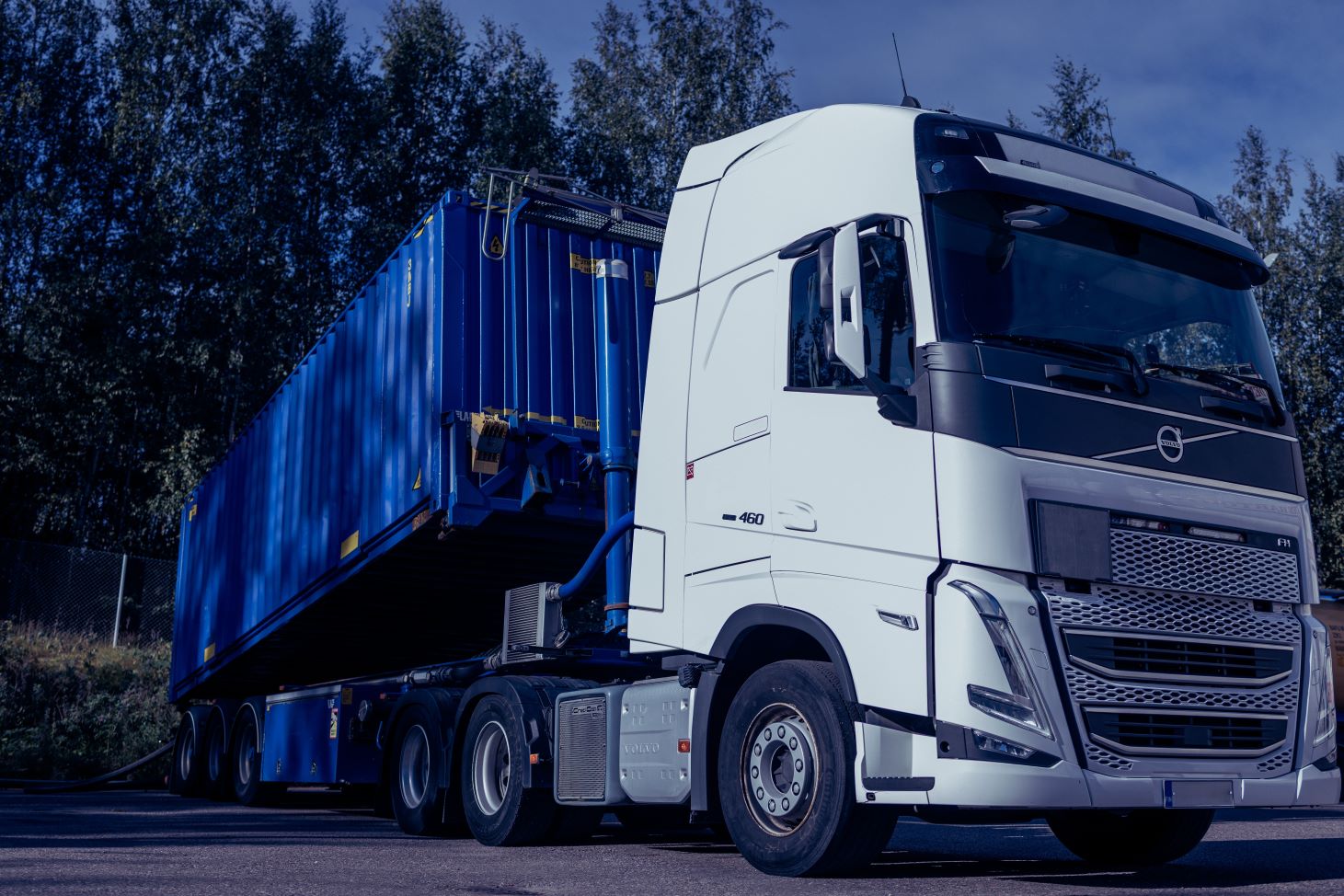
- Inland transport to port: The loaded container moves by truck or rail to the departure port. This leg requires coordination with port schedules and shipping line bookings.
- Sea freight: The container is shipped via ocean freight to the destination port. For Nordic-Baltic routes, this often connects to major global hubs.
- Port handling at destination: The container is unloaded, inspected, and cleared through customs before moving to the next transport leg.
- Final delivery: The container travels by road or rail to the final destination, where the cargo is discharged and the container is returned for cleaning and reuse.
Door-to-door bulk cargo logistics services cover this entire chain, meaning one logistics partner manages all steps rather than the shipper coordinating multiple separate providers. This simplifies communication and reduces the risk of delays at handover points.
What is the difference between ISO tanks and flexitanks?
The main difference between ISO tanks and flexitanks is their construction, reusability, and the type of cargo they can carry. ISO tank containers are rigid, stainless steel vessels designed for repeated use and capable of carrying both hazardous and non-hazardous liquids and gases. Flexitanks are single-use or limited-use flexible bladders fitted inside standard 20-foot dry containers, designed exclusively for non-hazardous liquid cargo.
From a practical standpoint, the choice between the two depends on your cargo and operational needs rather than technical specifications alone:
- ISO tanks are the right choice when you are shipping chemicals, gases, high-heat cargo, or any hazardous liquid. They are built to strict international safety standards, can be cleaned and reused, and work across all intermodal transport modes. We operate ISO tank containers globally, which means you do not need to manage equipment sourcing, scheduling, or logistics independently. This end-to-end operational model is what makes the service genuinely practical for businesses with complex or recurring shipment needs.
- Flexitanks are a cost-effective flexitank transport solution for non-hazardous liquids. A flexitank can hold up to 27,000 litres, which is significantly more than a standard intermediate bulk container, and it uses a dry container that is widely available on most shipping routes. This makes flexitanks particularly useful for food-grade liquids, non-dangerous industrial fluids, and other bulk liquids where hazardous classification is not a factor.
The advantage for you as a customer is not just the equipment itself but the fact that managing these assets, maintaining quality standards, and optimising routes is handled on your behalf. This keeps costs transparent and aligned with the full scope of service provided.
Why is the Nordic and Baltic region suited for intermodal bulk logistics?
The Nordic and Baltic region is well suited for intermodal bulk logistics because it combines strong port infrastructure, established shipping routes to global markets, and a network of road and rail connections that support efficient inland transport. The region’s geography, with multiple major ports in Finland, Sweden, Estonia, Latvia, and Lithuania, creates natural intermodal hubs for both import and export flows.
Several factors make this corridor particularly functional for bulk cargo:
- Major ports in the region connect directly to deep-sea routes serving Asia, the Americas, and the Middle East.
- The Baltic Sea provides a practical sea leg for short-sea shipping between Nordic and Baltic countries before connecting to larger ocean freight networks.
- Road transport infrastructure supports reliable trucking for first- and last-mile delivery across the region.
- The industrial base in the Nordics and Baltics includes significant chemical, food, and manufacturing activity, generating consistent demand for bulk cargo transport.
For global tank container operators without their own offices in Finland or the Baltics, having a local partner with operational knowledge of this region removes a significant barrier. Understanding port procedures, local carrier networks, and regulatory requirements takes time to build, and working with an established regional operator reduces that complexity considerably.
How do customs and documentation work in Nordic-Baltic bulk shipments?
Customs and documentation for Nordic-Baltic bulk shipments involve standard international trade paperwork combined with region-specific requirements. Finland and the other Nordic EU members follow EU customs regulations, while the Baltic states—Estonia, Latvia, and Lithuania—are also EU members, which simplifies intra-EU movements. Shipments entering or leaving the EU require full customs declarations, classification of goods, and compliance with any relevant product-specific regulations.
For bulk cargo specifically, documentation typically includes:
- Bill of lading or waybill covering the sea freight leg.
- Commercial invoice and packing list.
- Material safety data sheets for chemical or hazardous cargo.
- Certificate of analysis or food safety documentation for food-grade products.
- Customs export and import declarations.
- Container inspection and cleaning certificates for tank containers.
Getting documentation right is one of the most common sources of delay in international bulk shipments. Errors in cargo classification, missing certificates, or incomplete declarations can hold a shipment at the border for days. Working with a freight forwarding partner that handles both the logistics and the customs process under one roof reduces this risk significantly, since the same team managing your transport also understands the documentation requirements for your specific cargo type.
Smooth import and export customs clearance is part of the end-to-end service we provide at Transitainer Shipping. Whether you are moving tank container cargo through the Baltics, shipping dry bulk commodities from Finland, or importing food-grade liquids via flexitank, we handle the full logistics chain from first contact to final delivery. If you are ready to simplify your bulk cargo operations, reach out to our team to discuss the right solution for your cargo.