Flexitanks have become one of the most practical tools in bulk liquid shipping, yet many shippers are still unfamiliar with how they work or when they make sense. Whether you are moving food-grade oils, industrial chemicals, or non-hazardous liquids across borders, understanding your packaging options directly affects your cost, efficiency, and cargo safety. This guide answers the most common questions about flexitanks so you can make informed decisions about your bulk liquid logistics.
What is a flexitank and how does it work?
A flexitank is a large, flexible bladder made from food-grade or industrial-grade polyethylene that fits inside a standard 20-foot dry container. It converts an ordinary shipping container into a bulk liquid carrier, holding up to 27,000 litres of cargo in a single unit. The bladder is sealed and designed for single use, eliminating the need for cleaning between shipments.
The concept is straightforward: the flexitank is installed inside the container before loading, filled with liquid cargo through a valve system, and sealed for transport. Once the container arrives at its destination, the liquid is pumped out through the same valve. Because the flexitank uses a standard dry container as its outer shell, it integrates smoothly into existing intermodal transport networks, moving by sea, road, and rail without requiring specialised handling equipment at every point in the journey.
What types of cargo are flexitanks used for?
Flexitanks are used for non-hazardous bulk liquids, including food-grade products and industrial fluids. Common cargo types include vegetable oils, fruit juices, wine, syrups, latex, glycerin, and non-hazardous chemicals. The single-use design and food-grade lining options make flexitanks particularly well-suited for liquid food ingredients that require hygienic transport conditions.
It is important to note that flexitanks are not suitable for hazardous cargo, flammable materials, or substances that require pressure control. For those cargo types, an ISO tank container is the appropriate choice. If you are unsure whether your product qualifies for flexitank transport, the cargo classification and safety data sheet will provide the clearest answer.
What is the difference between a flexitank and an ISO tank?
The main difference between a flexitank and an ISO tank is that a flexitank is a single-use liner placed inside a standard dry container, while an ISO tank is a permanent, reusable stainless steel vessel built to international standards. ISO tanks can carry hazardous, pressurised, and temperature-sensitive cargo, whereas flexitanks are limited to non-hazardous liquids.
From a practical standpoint, the two options serve different customer needs rather than competing directly. ISO tanks require cleaning, maintenance, and repositioning after each use, which adds operational complexity. Flexitanks, being single-use, remove that burden entirely. However, for cargo that requires precise temperature control, pressure management, or hazardous goods certification, an ISO tank is the only viable option.
The choice also affects how you manage your supply chain. With ISO tanks, you rely on a tank operator to manage the equipment lifecycle. With flexitanks, the container itself is the asset, and the liner is a consumable. Both models have their place, and the right answer depends on your cargo type, volume, and shipment frequency.
What are the advantages of using a flexitank for bulk liquid shipping?
The main advantages of flexitank transport are cost efficiency, simplicity, and flexibility. Because flexitanks use standard dry containers, they avoid the premium associated with specialised tank equipment. There is no cleaning cost, no repositioning cost, and no waiting for available tank containers. For non-hazardous bulk liquids, this makes flexitanks one of the most cost-effective bulk liquid transport solutions available.
- Lower cost per litre: Filling a single flexitank with up to 27,000 litres in a standard 20-foot container significantly reduces the cost compared to shipping the same volume in drums or intermediate bulk containers.
- No cleaning or maintenance: The single-use design means no residue risk, no cleaning fees, and no turnaround delays.
- Simplified logistics: Standard containers move through every port and transport mode without special handling requirements.
- Reduced packaging waste: Compared to drums and IBCs, flexitanks reduce the total packaging volume considerably, which also supports recycling programmes.
- Fast loading and unloading: Pumping bulk liquid in and out of a flexitank is faster than handling hundreds of individual drums.
For businesses shipping non-hazardous liquids in volume, these advantages add up quickly. The cost savings on packaging alone can be significant when you compare the price of a flexitank liner to the equivalent number of drums needed for the same shipment.
When should you choose a flexitank over other packaging options?
You should choose a flexitank when you are shipping non-hazardous bulk liquids in volumes that make individual packaging impractical or expensive. If your shipment exceeds a few thousand litres and your cargo does not require pressure control, hazardous goods handling, or reusable equipment, a flexitank is almost always the more efficient and cost-effective option compared to drums, IBCs, or smaller containers.
Flexitanks work best when you have a consistent, point-to-point flow of cargo rather than complex multi-stop routes. They are particularly well-suited for food manufacturers, chemical producers, and commodity traders who ship large volumes on regular lanes. If your cargo is classified as hazardous or requires temperature-controlled transport with active heating or cooling systems, an ISO tank is the better fit.
A useful way to think about it is this: if you are filling more than 50 drums per shipment and your cargo is non-hazardous, it is worth evaluating whether a flexitank solution reduces your total logistics cost. In most cases, it does.
How is a flexitank loaded, transported, and unloaded?
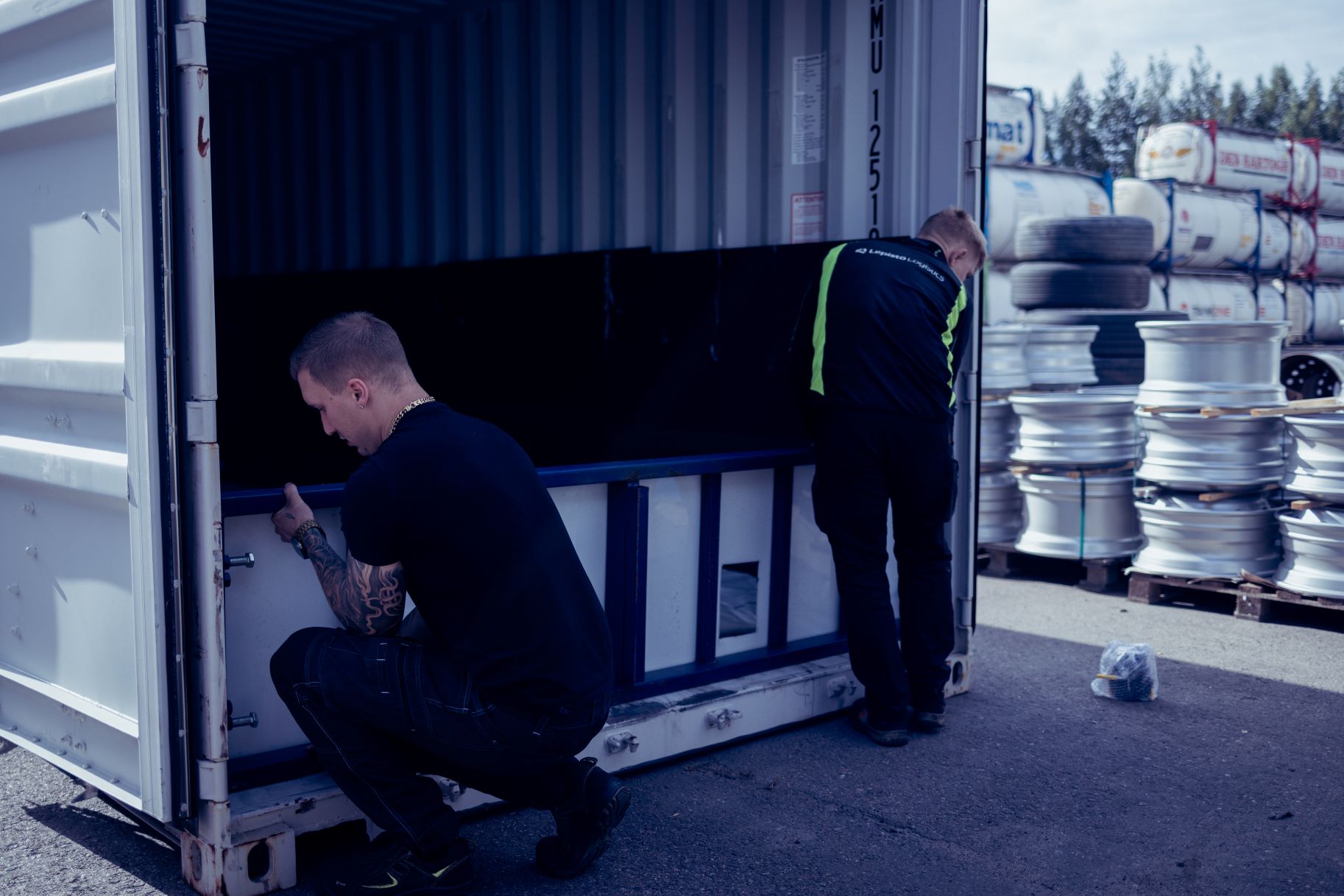
Loading a flexitank starts at a depot where the liner is fitted inside a clean, inspected 20-foot dry container. The flexitank is unfolded and secured to the container walls, and the fill valve is positioned at the container door. Liquid cargo is then pumped in through the valve until the tank reaches its target fill level, after which the valve is sealed and the container doors are closed for transport.
Transport and handling
During transport, the filled flexitank moves through the supply chain like any standard container, by truck, rail, or sea. No special handling equipment is required at ports or terminals, which is one of the key operational advantages of the flexitank model. Temperature-controlled storage is available at certain depots for cargo that requires it during intermediate stops.
Unloading and recycling
At the destination, the container doors are opened and the liquid is pumped out through the discharge valve. Gravity-assisted unloading is also possible by tilting the container. Once emptied, the used flexitank liner is removed from the container. Responsible logistics providers include recycling programmes to manage used liners rather than sending them to landfill.
The entire process is designed to minimise handling time and reduce the risk of contamination. Because the liner is single-use, there is no risk of cross-contamination from previous shipments, which is particularly important for food-grade cargo.
At Transitainer Shipping, we offer complete door-to-door flexitank logistics in Finland and beyond, covering fitting, loading support, inland transport, unloading assistance, and recycling through our nationwide depot network. We also operate ISO tank containers globally, meaning you do not need to manage equipment logistics or worry about finding available tanks on specific routes. Whether your cargo calls for a cost-effective flexitank solution or a full-service ISO tank operation, we handle the end-to-end process so you can focus on your business.
Not sure which solution is right for your cargo? Get in touch with our team and we will help you find the most efficient and cost-effective option for your bulk liquid shipment.