
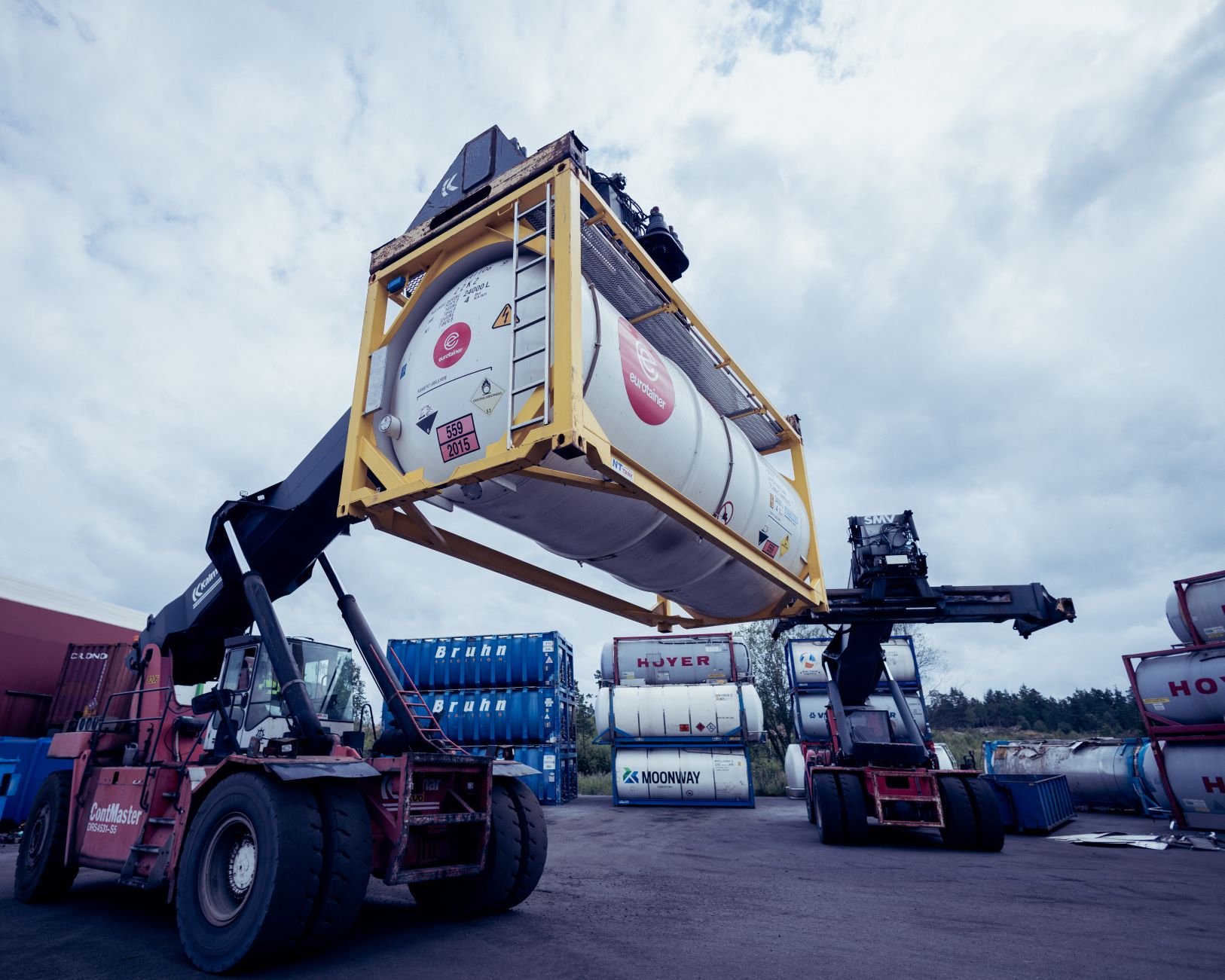
Tank containers and flexitanks are two different solutions for bulk liquid shipping that serve distinct needs in cargo transportation. Tank containers (ISO tanks) are reusable steel containers designed for liquids and gases, while flexitanks are disposable plastic bladders that fit inside standard shipping containers. Your choice depends on cargo type, safety requirements, and operational needs.
What are tank containers and flexitanks in bulk liquid shipping?
Tank containers are specialised steel containers built to ISO standards for transporting liquids and gases globally. These reusable units handle both hazardous and non-hazardous cargo, including chemicals, food-grade liquids, and gases. They provide secure, temperature-controlled transport with built-in safety systems.
Flexitanks are large, flexible plastic bladders designed for non-hazardous liquid transport. They fit inside standard 20-foot shipping containers, transforming them into liquid cargo carriers. After use, flexitanks are typically disposed of or recycled, making them a single-use shipping solution.
Both solutions address different aspects of liquid logistics. Tank containers offer versatility and durability for complex cargo requirements, while flexitanks provide cost-effective transport for straightforward liquid shipments. The choice between them depends on your specific cargo characteristics and operational requirements.
How do tank containers and flexitanks differ in capacity and design?
Tank containers typically hold between 17,500 and 26,000 litres, depending on the specific design and cargo requirements. Flexitanks can accommodate up to 27,000 litres, offering slightly higher capacity in some cases. However, capacity isn’t the only consideration when choosing between these solutions.
Tank containers feature robust steel construction with insulation options, heating systems, and safety valves. They’re built to withstand multiple trips and handle pressure variations. The permanent structure allows for precise temperature control and monitoring systems.
Flexitanks use multi-layer polyethylene construction that’s lightweight and flexible. They conform to the shape of the container, maximising space utilisation. While they lack the structural permanence of tank containers, flexitanks offer excellent protection against contamination for compatible cargo types.
The design differences reflect their intended use patterns. Tank containers support long-term, repeated use across various cargo types, while flexitanks optimise single-journey efficiency for specific liquid categories.
Which cargo types work best with tank containers versus flexitanks?
Tank containers handle the broadest range of cargo types, including hazardous chemicals, gases, high-temperature liquids, and food-grade products requiring strict hygiene standards. They’re suitable for any liquid or gas that needs specialised handling, temperature control, or safety containment.
Flexitanks work exclusively with non-hazardous liquids such as food oils, wines, fruit juices, and industrial liquids that don’t require heating or pressurisation. They excel with cargo that benefits from single-use containers to prevent cross-contamination.
Food-grade applications show clear distinctions. Tank containers can handle both hot and cold food products, dairy items, and liquids requiring specific temperature maintenance. Flexitanks suit ambient temperature food liquids where single-use packaging ensures product purity.
Chemical transport heavily favours tank containers due to safety requirements, compatibility testing, and the need for robust containment. Flexitanks cannot accommodate hazardous materials or products requiring temperature adjustment during transport.
What are the cost and operational differences between these shipping methods?
Flexitanks typically offer lower upfront costs per shipment since they’re single-use items with simpler logistics requirements. Tank containers involve higher individual shipment costs but provide better value for regular shipping routes and specialised cargo requirements.
Operational complexity differs significantly between the two solutions. Tank containers require specialised handling, cleaning, and maintenance between uses, plus coordination for container positioning and return logistics. This complexity increases when shipping irregular routes or managing equipment globally.
Flexitanks simplify operations by eliminating return logistics and cleaning requirements. You dispose of or recycle the flexitank after use, reducing logistical coordination. However, they require careful fitting and monitoring during transport to prevent damage.
For businesses needing regular liquid transport, the operational model becomes important. Companies that operate tank containers globally can provide end-to-end service solutions without requiring customers to manage equipment logistics themselves. This service approach often delivers better value than managing individual shipping components separately, especially when you need reliable, repeated transport solutions.
When choosing between tank containers and flexitanks for your bulk liquid shipping needs, consider your cargo characteristics, safety requirements, and operational preferences. Both solutions offer distinct advantages depending on your specific transport requirements. At Transitainer Shipping, we work with both flexitanks and ISO tanks to provide flexible, reliable shipping solutions tailored to your cargo needs and operational requirements. Contact us for more information.