Shipping bulk cargo across the Nordic region is rarely straightforward. Long distances, demanding climate conditions, strict regulatory environments, and the need to coordinate multiple transport modes make it one of the more complex logistics challenges in Europe. For companies moving liquids, gases, or chemicals through Finland and the wider Nordic-Baltic corridor, tank container rental services have emerged as a practical and increasingly popular alternative to outright ownership, offering operational flexibility without the capital commitment.
Whether a business is scaling up seasonal volumes, entering new markets, or simply looking to reduce the burden of equipment management, ISO tank container rental addresses real operational pain points. This article walks through how the model works, what it offers over ownership, and how it fits into a modern intermodal supply chain.
The Nordic logistics challenge for bulk cargo shippers
The Nordic market presents a distinctive set of conditions that make bulk cargo logistics more demanding than in many other regions. Finland, Sweden, Norway, and Denmark share a geography defined by long coastlines, sparse inland infrastructure in some areas, and seasonal extremes that affect road and port operations. For companies importing or exporting liquid or dry bulk commodities, these factors compound quickly.
Cross-border coordination adds another layer of complexity. Moving cargo between Finland and the Baltics, or connecting Nordic ports to deep-sea shipping lanes, requires precise timing, compatible equipment, and reliable partners at every handover point. Many shippers find that managing their own tank container fleet in this environment becomes a logistical challenge in itself: equipment sitting idle between shipments, maintenance obligations piling up, and fleet availability failing to match fluctuating demand. This is precisely the gap that ISO tank rental in Finland and across the Nordics is designed to fill.
How tank container rental works in practice
Tank container rental operates on a straightforward principle: a logistics provider supplies the ISO tank equipment, manages its global positioning, and coordinates its use across shipments, so the shipper focuses on their cargo, not their containers.
In practice, this means the rental provider maintains a pool of ISO tank containers available across key locations and trade lanes. When a shipment is needed, the appropriate tank is allocated, inspected, cleaned if required, and dispatched. After delivery, the provider handles repositioning, maintenance, and documentation. For shippers, this removes the need to track equipment across continents or manage cleaning and certification schedules independently.
We operate ISO tank containers globally, which means our customers do not need to worry about maintaining regular shipping lines or managing logistics infrastructure themselves. The pricing model reflects this full-service approach: what a business pays for is not just the container, but the entire operational layer behind it: coordination, compliance, repositioning, and technical expertise bundled into a single service relationship. This is a fundamentally different proposition from simply leasing a steel box.
Key advantages over owning or buying ISO tanks
Owning ISO tank containers makes sense for very large operators with consistent, high-volume, predictable trade lanes. For most industrial shippers and mid-sized businesses, however, the economics and operational demands of ownership work against them.
The capital cost of purchasing ISO tanks is significant, and that investment must be justified by utilization rates that are genuinely difficult to maintain. Tanks sitting idle between shipments generate no revenue but continue to incur storage, inspection, and maintenance costs. Certification requirements, including periodic pressure testing and cleaning validation for food-grade or chemical cargo, add further overhead that requires either internal expertise or third-party management.
Rental eliminates these fixed burdens and converts them into variable costs that scale with actual shipping activity. Businesses gain access to a broader equipment pool than they could justify owning, including specialized tanks suited for high-heat cargo, gases, or food-grade liquids. Flexibility is another critical advantage: volumes can be scaled up or down without the commitment of a long-term asset on the balance sheet. For companies operating in sectors with seasonal demand peaks or evolving trade patterns, this adaptability is genuinely valuable.
What cargo types are best suited for rental tanks
ISO tank containers are engineered to carry a wide range of bulk liquids and gases, and rental arrangements suit most of these cargo categories well, particularly where shipment frequency or volume varies across the year.
Chemical manufacturers transporting industrial liquids, solvents, or hazardous substances benefit significantly from rental, as the provider handles the compliance documentation, labeling, and equipment certification required for each cargo type. Food and beverage companies moving ingredients such as edible oils, syrups, or liquid food products rely on food-grade ISO tanks that meet hygiene standards, and rental gives them access to correctly certified equipment without maintaining a dedicated fleet.
Gas cargo and high-heat products represent more specialized applications where technical compatibility between cargo and container is critical. In these cases, working with a provider that understands both the equipment specifications and the regulatory framework is essential. Dry bulk container rental follows a different but parallel logic: liner bags and bulk containers suited for granules, powders, and similar commodities can also be accessed through a managed service model, giving dry bulk shippers the same flexibility advantages as their liquid cargo counterparts.
Integrating rental tanks into your intermodal supply chain
Tank container rental delivers its full value when it is woven into a broader intermodal logistics strategy rather than treated as a standalone arrangement. The ISO tank format is inherently intermodal: the same container moves by road, rail, and sea without cargo transfer, which reduces handling risk, simplifies documentation, and shortens transit times.
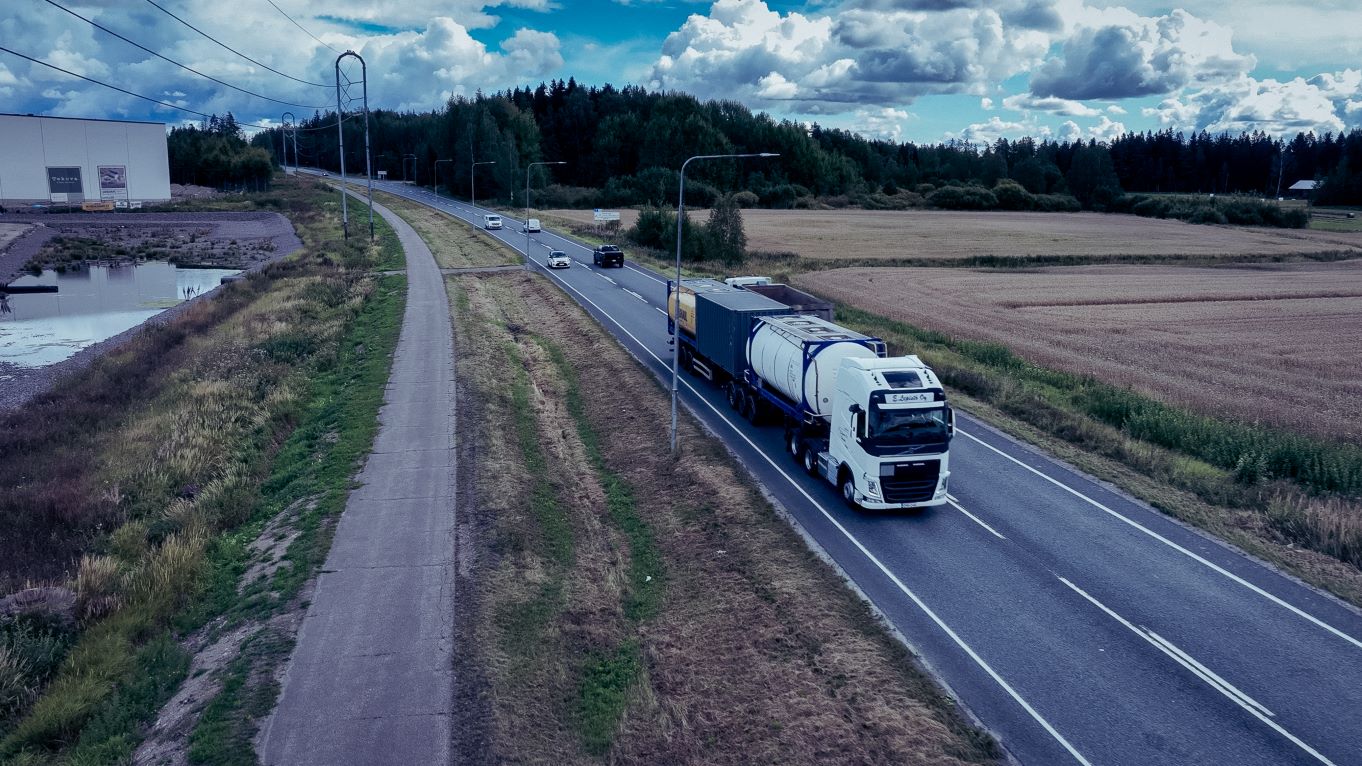
For Nordic and Baltic shippers, this intermodal compatibility is particularly useful. A shipment originating in Finland can move by truck to a port terminal, transfer to a deep-sea vessel, and continue by road at the destination, all within the same tank. When the rental provider also manages trucking, terminal handling, and customs documentation, the coordination burden on the shipper drops considerably. Our services cover exactly this scope: local operations in the Nordics and Baltics, combined with a global network that connects Finnish shippers to international trade lanes.
The practical starting point for integration is a clear mapping of existing trade flows: which routes, which cargo types, and which volumes are consistent enough to plan around. From there, a rental arrangement can be structured to match operational rhythms, with equipment availability aligned to shipping schedules rather than left to chance. As supply chains evolve in 2026 and beyond, the ability to adjust equipment commitments quickly will only become more valuable, and tank container rental is built precisely for that kind of agility. Contact us to discuss your shipping needs.