Flexitanks have become one of the most practical and cost-effective ways to move bulk liquids across borders, and more businesses are turning to them as an alternative to traditional tank containers. But if you’re new to the process, the depot fitting stage can feel like a black box. What actually happens there, how long does it take, and how do you know the job is done properly?
This article walks you through the full flexitank fitting process at a depot, from installation to quality checks, so you can plan your shipments with confidence and choose the right setup for your cargo. Whether you’re managing door-to-door bulk cargo logistics services for the first time or looking to optimise an existing supply chain, these answers will give you a clear picture of how it all works.
What is a flexitank and how is it used in bulk liquid transport?
A flexitank is a large, flexible bladder installed inside a standard 20-foot shipping container, designed to carry bulk liquids in a single, self-contained unit. With a capacity of up to 27,000 litres, it turns an ordinary dry container into a liquid transport vessel without the need for specialised tank equipment.
Flexitanks are used for non-hazardous bulk liquids such as food-grade oils, beverages, industrial fluids, and similar cargo. The bladder sits inside the container and is filled through a valve system, making loading and unloading straightforward at both the origin and destination. Because the flexitank itself is a single-use or limited-use liner, there is no cleaning cycle required between shipments in the same way there is for ISO tanks, which reduces turnaround time and operational complexity.
For businesses moving large volumes of non-hazardous liquids on a regular basis, flexitanks offer a genuinely practical solution. They make use of the existing global network of standard shipping containers, which means you can access a wide range of routes and shipping lines without depending on specialised equipment availability.
What happens during a flexitank fitting service at a depot?
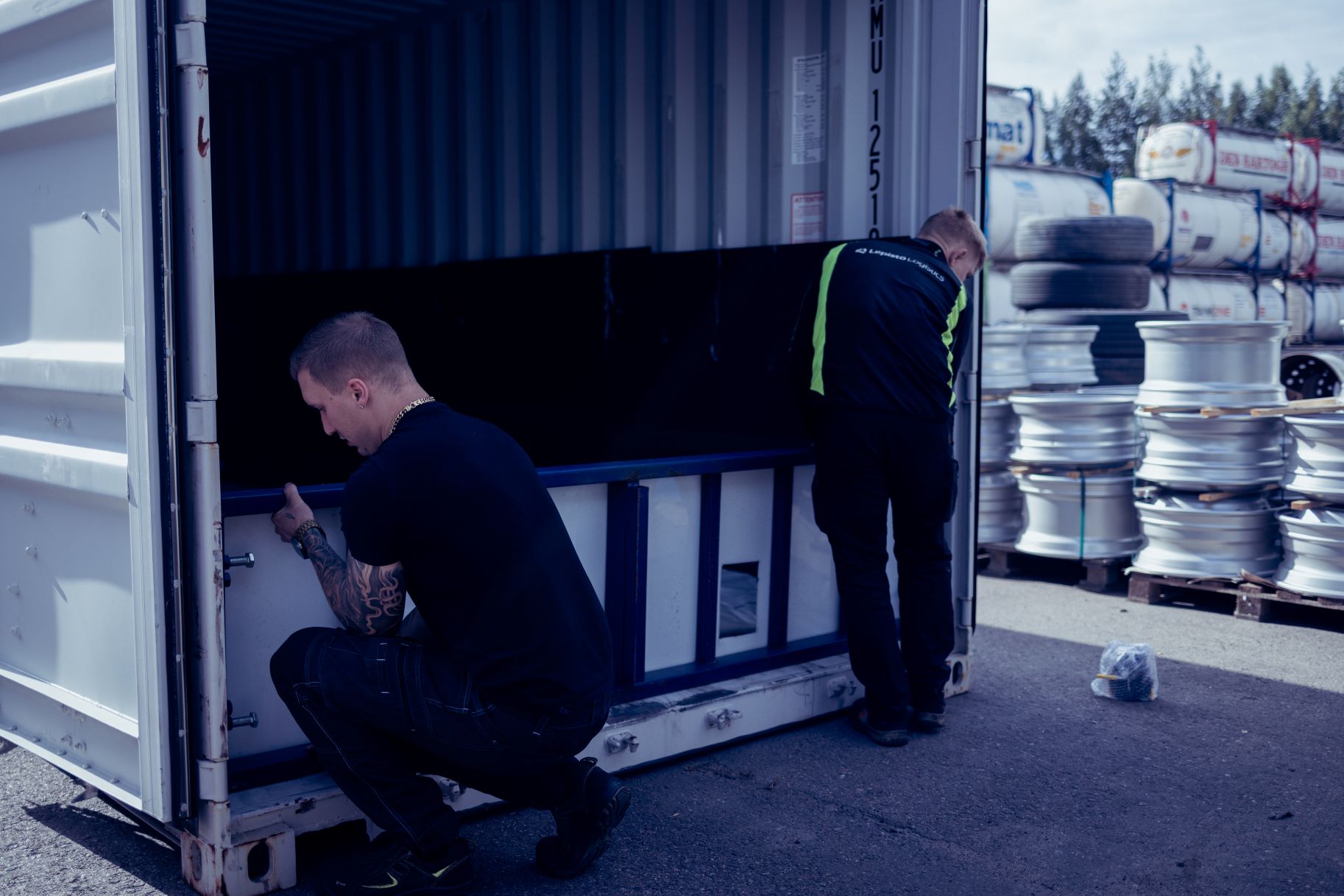
During a flexitank fitting service at a depot, a trained technician installs the flexitank bladder inside a 20-foot container, secures it correctly, and prepares it for loading. The process covers physical installation, valve positioning, and a set of checks to confirm the unit is ready for cargo.
The depot is where the container is prepared before it moves to your loading facility or supplier. The technician places the flexitank liner inside the container, ensuring it sits correctly against the container walls and floor without any folds or stress points that could cause damage during transit. The fill and discharge valve is positioned and secured, typically through the container door, so that loading and unloading can happen efficiently at each end of the journey.
What does the depot technician actually do?
The technician inspects the container itself before installation begins, checking for damage, moisture, or contamination that could compromise the cargo. Once the container passes inspection, they install the flexitank liner, fit the valve assembly, and secure any protective baffles or support boards as required by the flexitank manufacturer’s guidelines. The fitting is documented, and the container is sealed and ready for transport to the loading point.
A good depot will also handle coordination, confirming that the correct flexitank specification is used for your specific cargo type and volume. This is particularly relevant if your cargo has specific temperature requirements, since some depots offer temperature-controlled storage as part of their flexitank service.
How long does a flexitank installation take at a depot?
A standard flexitank installation at a depot typically takes between one and three hours, depending on the container’s condition, the specific flexitank model being used, and the depot’s workload. In most cases, the container is ready for transport to the loading site on the same day.
The fitting process itself is relatively quick when the container is clean and undamaged. Most of the time is spent on preparation, including container inspection, positioning the liner correctly, and securing the valve. If the container requires any cleaning or minor repairs before fitting, this will add time to the process.
For businesses planning shipments, it is worth building the depot fitting step into your overall timeline when coordinating collection and delivery schedules. Most depots can confirm their lead times in advance, so you can align the fitting appointment with your loading date and avoid unnecessary delays in your supply chain.
What quality and safety checks are carried out before loading?
Before a flexitank is approved for loading, the depot carries out checks on the container structure, the bladder’s integrity, and the valve assembly. These checks confirm that the unit is free from damage, correctly installed, and fit to carry your cargo without the risk of leakage or contamination.
The container inspection looks at the floor, walls, and roof for holes, rust, sharp edges, or moisture that could damage the flexitank liner during transit. A damaged container can cause the bladder to fail under the weight and pressure of a full liquid load, so this step is not optional. The liner itself is checked for any manufacturing defects or damage that may have occurred during storage or handling.
Valve and seal verification
The valve assembly is tested to confirm it seals correctly and will not leak during filling or transit. Technicians verify that the valve is correctly positioned for access through the container door and that all fittings are tight and secure. This is particularly important for food-grade cargo, where any contamination risk needs to be eliminated before loading begins.
Documentation is also part of the quality process. A fitting certificate or inspection record is typically issued by the depot, confirming that the installation meets the required standards. This documentation supports your cargo records and can be useful for customs clearance and cargo insurance purposes.
What is the difference between a flexitank and an ISO tank for bulk liquids?
The main difference between a flexitank and an ISO tank is that a flexitank is a disposable or limited-use liner fitted inside a standard shipping container, while an ISO tank is a permanent stainless steel vessel built to carry liquids and gases across multiple shipments. Each option suits different cargo types, volumes, and operational needs.
For non-hazardous liquids in standard volumes, a flexitank offers a more cost-effective approach. You use the existing pool of standard 20-foot containers, avoid the equipment repositioning costs associated with ISO tanks, and benefit from a simpler loading and unloading process. The capacity of up to 27,000 litres makes flexitanks well suited to large-volume liquid shipments where the cargo does not require the specialised containment of a steel tank.
When does an ISO tank make more sense?
ISO tanks are the right choice for hazardous chemicals, gases, high-heat cargo, and any liquid that requires a pressure-rated or temperature-controlled vessel. They are reusable, built to strict international standards, and designed for cargo that cannot safely travel in a flexible liner. For businesses moving sensitive or regulated liquids, the ISO tank provides the containment and traceability that the cargo demands.
From an operational perspective, the two solutions also differ in how equipment is managed. With ISO tanks, the logistics provider manages the tank fleet, repositioning, cleaning, and maintenance across global routes. This means you do not need to track equipment availability yourself or coordinate cleaning cycles between shipments. The service model is more comprehensive, and the pricing reflects the full scope of that operational management. With flexitanks, the logistics are simpler on the equipment side, but the trade-off is that they are only suitable for a narrower range of cargo types.
How do you choose the right depot for a flexitank fitting service?
To choose the right depot for a flexitank fitting service, look for a facility that has trained technicians, experience with your cargo type, a reliable inspection process, and good geographic coverage relative to your loading and collection points. The depot’s ability to coordinate with your broader logistics chain matters as much as the fitting itself.
Geographic location is a practical starting point. A depot that is well positioned relative to your supplier or loading facility reduces unnecessary transport moves before the container reaches its loading point. In Finland and the Nordics, access to a nationwide depot network makes it easier to coordinate flexitank fitting with your inland transport schedule, particularly for time-sensitive shipments.
What services should a good depot offer alongside fitting?
Beyond the installation itself, a capable depot should be able to support temperature-controlled storage if your cargo requires it, offer cross-pumping services when needed, and provide technical assistance if issues arise during loading. Recycling programmes for used flexitanks are also worth considering, particularly if your business has sustainability commitments.
It is also worth asking whether the depot works with a specific range of flexitank manufacturers or brands. Using a depot that is familiar with the product you are shipping reduces the risk of compatibility issues and ensures the fitting is carried out according to the manufacturer’s installation guidelines.
At Transitainer Shipping, we provide cost-effective flexitank transport solutions through a nationwide depot network in Finland, with full support for fitting, inland transport, loading and unloading, and recycling. We also operate ISO tank containers globally, which means we manage the full equipment cycle on your behalf, so you do not need to coordinate routes, repositioning, or maintenance yourself. Whether your cargo calls for a flexitank or an ISO tank, we can help you find the right solution and handle the logistics from start to finish. If you’re ready to move forward, reach out to our team to discuss your next bulk liquid shipment.
This content was generated with the help of AI — it may contain mistakes