Managing bulk cargo logistics across multiple countries is rarely straightforward. Whether you’re shipping liquid chemicals, food-grade ingredients, or dry granules, the moment your cargo crosses a border, you’re dealing with a different set of rules, carriers, and infrastructure requirements. Getting it right takes planning, the right equipment choices, and a clear understanding of how international supply chains actually work.
This guide walks through the most common questions businesses ask when setting up or improving their bulk cargo operations across multiple countries. If you’re a logistics manager, an importer, or a procurement lead trying to make sense of your options, you’ll find practical answers here.
What is bulk cargo logistics, and why is it complex across borders?
Bulk cargo logistics refers to the planning, transport, and handling of large volumes of unpackaged goods, including liquids, gases, and dry commodities such as powders or granules. Across borders, this becomes complex because each country has its own customs requirements, carrier regulations, infrastructure limitations, and documentation standards—all of which must align for a shipment to move without delays.
Unlike standard packaged freight, bulk cargo requires specialized equipment, specific handling procedures, and often temperature or pressure controls that must remain consistent throughout the entire journey. A liquid chemical that leaves a plant in Finland may travel by road, sea, and rail before reaching its destination in Asia or the Americas. Each mode transition is a potential point of failure if coordination breaks down.
Cross-border bulk shipments also involve multiple parties, including freight forwarders, terminal operators, customs agents, and shipping lines. Keeping all of them aligned around a single shipment requires both technical knowledge and strong operational networks in each country along the route.
What types of containers are used in bulk cargo shipping?
The two most widely used container types in bulk cargo shipping are ISO tank containers and flexitanks. ISO tanks are stainless steel pressure vessels built into a standard container frame, designed for liquids, gases, and chemicals. Flexitanks are large, flexible bladders installed inside standard 20-foot dry containers and are used for non-hazardous bulk liquids. Dry bulk shipments use liner bags, bulk containers, or silo containers, depending on the commodity.
ISO tank containers
ISO tanks are built for demanding cargo, including hazardous chemicals, food-grade liquids, and gases. Their robust construction means they can handle high-temperature cargo, pressurized gases, and sensitive products that require strict hygiene standards. Because they are standardized to fit intermodal transport systems, ISO tanks move seamlessly between trucks, ships, and rail without transferring the cargo itself.
One important advantage for customers is that when a logistics provider operates ISO tanks globally across all services, you don’t need to manage equipment availability, route planning, or carrier coordination yourself. The provider handles the full cycle, from loading to cleaning, maintenance, documentation, and delivery.
Flexitanks
Flexitanks offer a cost-effective alternative for non-hazardous bulk liquids. A single flexitank can hold up to 27,000 litres inside a standard 20-foot container, making it a practical choice for products such as edible oils, syrups, or non-hazardous industrial liquids. Because they use standard dry containers, flexitanks give you access to a wider pool of shipping capacity without needing specialized tank equipment on every route.
Dry bulk containers and liner bags
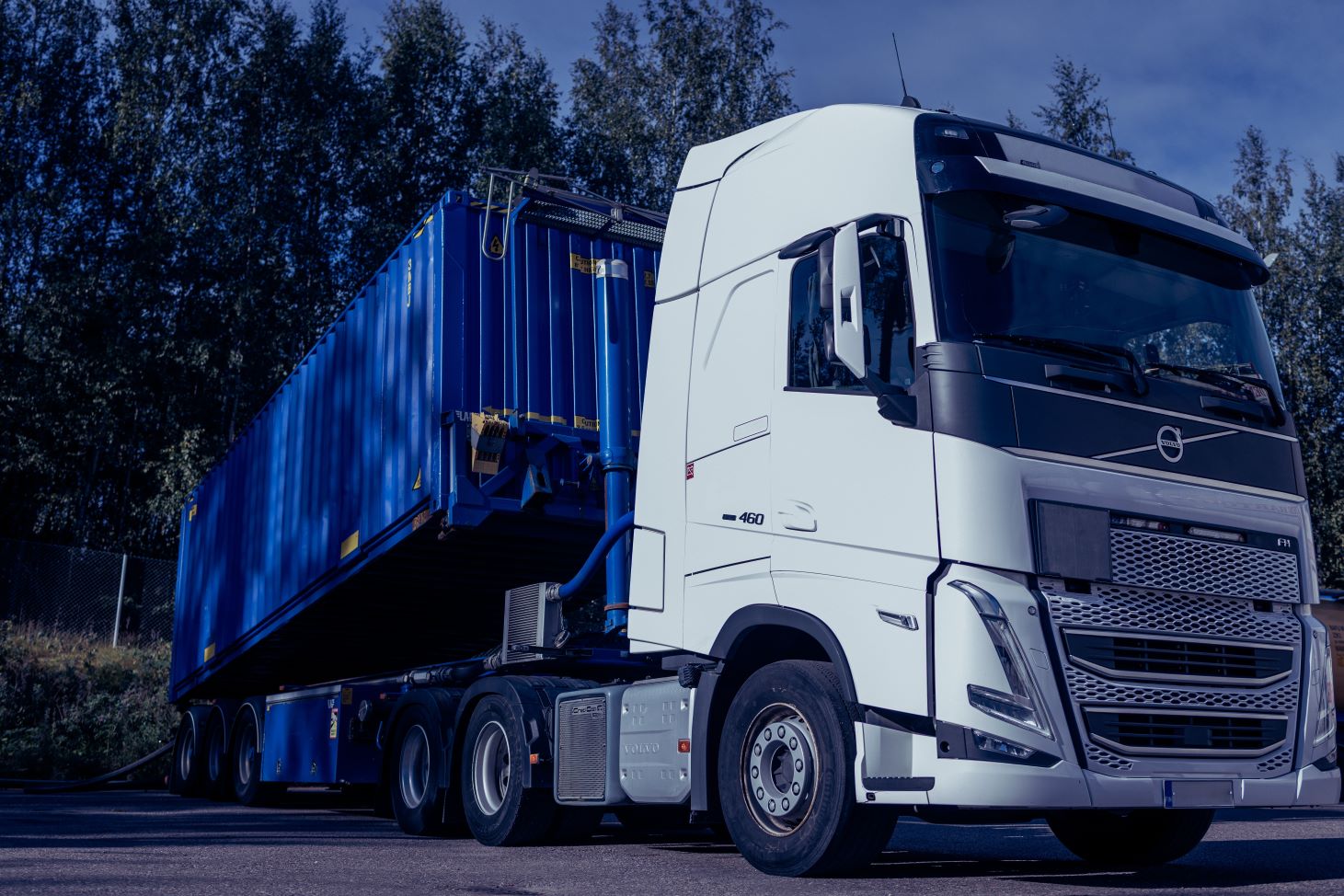
For dry commodities such as chemical granules, food-grade powders, or agricultural products, high-quality liner bags fitted inside standard containers provide a clean, contained transport solution. Silo containers and bulk containers with tipping chassis offer additional options for direct container-to-silo transfers, which reduce handling steps and contamination risk.
How does intermodal transport work for bulk cargo?
Intermodal transport for bulk cargo means moving a single container across multiple transport modes—typically road, sea, and sometimes rail—without transferring the cargo between vehicles. The container itself becomes the constant unit throughout the journey. For bulk cargo, this approach reduces handling, maintains cargo integrity, and allows for more flexible routing across long international distances.
In practice, a bulk liquid shipment might start with a truck collecting a loaded ISO tank from a production facility, move to a port for deep-sea transport, and then continue by road or rail to the final destination. Because the cargo stays inside the same container throughout, the risk of contamination, spillage, or damage during transfers is significantly lower than with break-bulk methods.
Intermodal solutions work particularly well for routes connecting the Nordics and Baltics to global markets, where deep-sea connections combine with well-developed road networks. The ability to combine these modes efficiently depends on having the right equipment available at each point and reliable partners who can coordinate across borders without gaps in service.
How do you handle customs clearance for bulk cargo shipments?
Customs clearance for bulk cargo shipments requires accurate documentation, correct commodity classification, and compliance with the import and export regulations of every country involved in the shipment. The process typically includes preparing commercial invoices, packing lists, certificates of origin, safety data sheets for hazardous goods, and any product-specific certificates required by the destination country.
For bulk liquids and chemicals, customs authorities often require detailed product declarations and may inspect shipments before release. Errors in documentation, incorrect tariff codes, or missing certificates can cause delays that affect your entire supply chain. This is why customs handling for bulk cargo is best managed by specialists who understand both the technical nature of the cargo and the regulatory environment of each market.
Smooth customs clearance also depends on timing. Submitting documentation in advance, coordinating with port terminals, and having a local customs agent who knows the specific requirements of the destination country all reduce the risk of delays. End-to-end logistics support that includes customs services removes the burden from your internal team and keeps the shipment moving on schedule.
What are the biggest challenges in managing bulk cargo across multiple countries?
The biggest challenges in managing bulk cargo across multiple countries include equipment availability, regulatory compliance across jurisdictions, documentation accuracy, and maintaining cargo integrity throughout complex multimodal routes. Each of these factors can independently cause delays or additional costs if not managed proactively.
- Equipment availability: ISO tanks and specialized bulk containers are not always available where and when you need them. Without a strong global network, you may face delays while suitable equipment is repositioned.
- Regulatory differences: Each country has its own rules for transporting chemicals, food-grade products, and hazardous materials. What is permitted in one market may require additional permits or packaging standards in another.
- Documentation complexity: Multi-country shipments generate a large volume of paperwork. A single error in a customs declaration or a missing certificate can hold up an entire shipment at a border crossing.
- Cargo integrity: Maintaining temperature, pressure, or hygiene standards across multiple transport modes and transit points is technically demanding, particularly for sensitive liquids or gases.
- Coordination across parties: Trucking companies, shipping lines, terminal operators, and customs agents all need to work in sync. Without a single point of coordination, gaps between parties create delays and accountability issues.
Managing these challenges well requires both operational experience and a reliable partner network in each region your cargo moves through. The more countries involved, the more value a single coordinating provider brings to the process.
When should you use a specialist bulk logistics provider?
You should use a specialist bulk logistics provider when your cargo requires specific handling equipment, when your shipments cross multiple borders, or when your internal team lacks the technical expertise or partner network to manage the full transport chain reliably. The more complex or sensitive the cargo, the stronger the case for working with a specialist from the start.
For businesses shipping hazardous chemicals, food-grade liquids, or dry bulk commodities internationally, the technical requirements alone justify specialist involvement. ISO tank transport, flexitank fitting, liner bag selection, and silo container logistics each require specific knowledge that generalist freight providers often cannot offer at the same level of reliability.
Specialist providers also bring established relationships with shipping lines, terminal operators, and customs authorities in key markets. This network access often translates directly into better rates, faster transit times, and fewer disruptions than trying to build those relationships independently.
If your business is growing into new markets, particularly in the Nordics, Baltics, or global deep-sea routes, partnering with a specialist early means you build your logistics infrastructure on a solid foundation rather than retrofitting solutions as problems emerge.
At Transitainer Shipping, we provide door-to-door bulk cargo logistics services, including ISO tank transport, cost-effective flexitank transport solutions, and dry bulk cargo transport services across the Nordics, Baltics, and worldwide. We operate our own tank container fleet globally, which means you don’t need to coordinate equipment, routes, or carriers yourself. Our team also handles freight forwarding and customs clearance, giving you a single point of contact for even the most technically demanding international shipments. If you’re ready to simplify your bulk cargo operations, reach out to our team to discuss your specific requirements—we’d be glad to help.