Baltic trade routes have grown significantly more complex over the past decade. Cross-border shipments between Finland, Estonia, Latvia, and Lithuania involve a layered mix of customs regimes, carrier networks, and seasonal infrastructure constraints that can turn even a straightforward bulk cargo movement into a coordination challenge. For companies handling liquid, gas, or dry bulk commodities, the question of how to manage container assets across this region is one that directly affects cost, speed, and reliability. Managed tank container rental services have emerged as a practical answer, shifting the operational burden away from shippers and toward specialist partners who understand the region’s dynamics.
This article walks through why Baltic supply chains create specific container management headaches, what managed rental actually covers in practice, and how choosing the right partner in the Nordics and Baltics can meaningfully reduce logistics complexity.
How Baltic Supply Chains Create Container Management Challenges
The Baltic region sits at a geographic crossroads between Northern Europe, Russia, and Central Europe, making it a strategically important corridor for bulk cargo. But that same geographic position introduces a set of structural challenges that are difficult to manage with conventional container ownership or ad-hoc rental arrangements.
Equipment availability is one of the most persistent problems. When ISO tank containers or dry bulk units are committed to a specific trade lane, repositioning them after discharge can be slow and expensive. Baltic ports handle a diverse mix of cargo types and carrier services, meaning that container fleets often end up concentrated in the wrong location at the wrong time. Add to this the seasonal volatility in demand, particularly for agricultural dry bulk and food-grade liquid cargo, and asset management becomes a full-time operational challenge.
Documentation and cross-border compliance add another layer. Shipments moving through multiple Baltic states face varying customs requirements, and errors in labeling, certification, or cargo classification can cause costly delays. For companies without deep regional expertise, managing these details alongside the physical movement of containers stretches internal resources thin.
What Managed Container Rental Actually Covers
Managed container rental goes well beyond simply providing a container for a fixed period. In a true managed rental model, the service provider takes responsibility for the full operational lifecycle of the equipment, not just its availability.
For ISO tank container rental, this typically includes cleaning and inspection between uses, maintenance and repair, documentation and labeling, terminal handling coordination, and repositioning logistics. Rather than the shipper tracking where their tanks are and arranging servicing independently, the provider manages these tasks as part of the rental agreement. This is particularly valuable for chemical and food-grade cargo, where cleaning certification and inspection records are not optional extras but regulatory requirements.
For dry bulk container rental, managed services often extend to liner bag supply, container-to-silo transfer coordination, and tipping chassis arrangements. The shipper receives a solution that handles the full movement of the cargo, not just the container itself. We operate tank containers globally across modes, which means our customers do not need to worry about maintaining regular shipping line relationships or managing equipment logistics independently. That global equipment base and operational reach is what makes the managed model genuinely different from a simple hire arrangement.
Key Complexity Drivers That Managed Rental Eliminates
Several specific complexity drivers make container management difficult for Baltic shippers, and managed rental directly addresses each of them.
Equipment Positioning and Availability
Owning or self-managing a container fleet requires constant attention to where equipment is, where it needs to be next, and how to reposition it cost-effectively. Managed rental transfers this responsibility to the provider, who maintains a broader equipment base and can absorb repositioning costs across multiple clients and trade lanes.
Maintenance and Compliance Overhead
ISO tanks and bulk containers must meet international standards for structural integrity, cleanliness, and certification. Tracking inspection schedules, arranging repairs, and maintaining documentation are time-consuming. A managed rental partner handles this internally, ensuring that every unit dispatched meets the required standards without the shipper needing to monitor compliance themselves.
Customs and Documentation Coordination
Cross-border shipments in the Baltics require accurate, timely documentation. Managed service providers with regional expertise integrate customs support and documentation handling into the service, reducing the risk of delays caused by paperwork errors. This is especially relevant for hazardous cargo classifications, where documentation errors carry regulatory consequences.
Seasonal Demand Spikes
Baltic trade patterns are not uniform across the year. Agricultural bulk movements, for example, peak at harvest periods, while chemical and industrial liquid cargo flows may follow different cycles. A managed rental model gives shippers access to flexible capacity without committing to fixed fleet ownership that sits underutilized during quieter periods.
How Intermodal Flexibility Fits Baltic Trade Patterns
The Baltic region’s transport infrastructure supports a genuine intermodal mix of sea, road, and rail, and bulk cargo shippers increasingly need to move fluidly between these modes depending on destination, timeline, and cost.
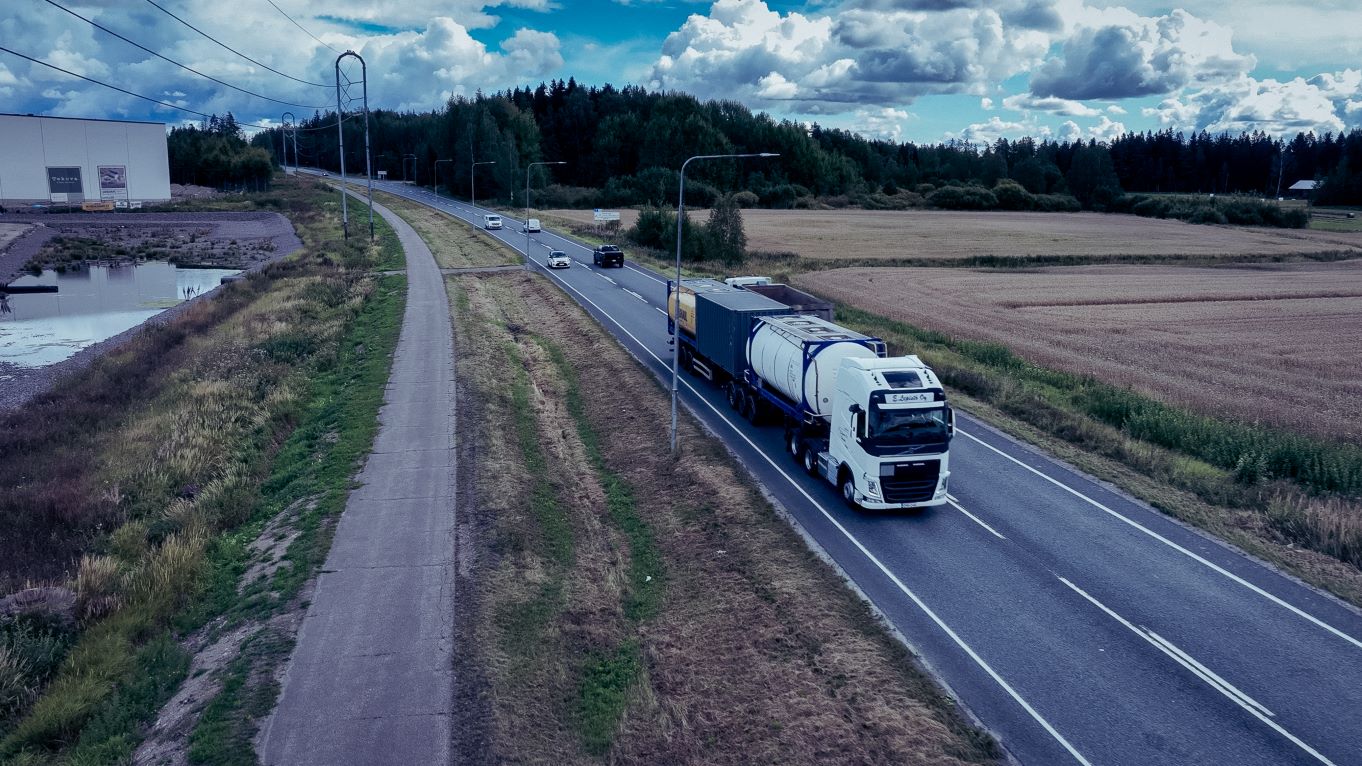
ISO tank containers are well suited to intermodal operations because they are designed to transfer between ship, truck, and rail without rehandling the cargo. This is a significant advantage on Baltic routes, where a single shipment might arrive by deep-sea vessel, transfer to a feeder service, and complete its journey by road to an inland facility. Managed rental providers who operate across all three modes can coordinate these transitions without the shipper needing to manage separate contracts with sea, road, and rail carriers.
For dry bulk cargo, intermodal flexibility matters in a different way. Container-to-silo transfers and SDU deliveries using rotary valve systems require specific equipment and handling expertise at the destination point. A managed provider who understands the full intermodal chain can plan these handovers in advance, reducing dwell time and avoiding the costly delays that occur when equipment or handling capability is not ready at the point of discharge.
Choosing the Right Managed Rental Partner in the Nordics and Baltics
Not all container rental providers offer the same depth of managed service, and the difference matters significantly in a region as operationally complex as the Baltics. Selecting the right partner requires looking beyond price and equipment availability to assess operational capability and regional knowledge.
Regional presence is a practical necessity. A partner with established depot networks, terminal relationships, and carrier connections across Finland, Estonia, Latvia, and Lithuania can respond to disruptions and repositioning needs far more effectively than one operating from a distance. Local knowledge of port procedures, customs practices, and seasonal infrastructure constraints translates directly into smoother operations for the shipper.
Technical expertise across cargo types is equally important. Companies moving food-grade liquids, hazardous chemicals, and dry bulk commodities have different equipment requirements, certification standards, and handling protocols. A partner who understands these distinctions and can apply them consistently across the supply chain reduces the risk of costly errors. We combine ISO tank operations, flexitank logistics, and dry bulk solutions within a single service framework, which means customers handling multiple cargo types do not need to coordinate between separate specialist providers.
Finally, look for a partner whose pricing model reflects genuine operational integration. In a well-structured managed rental arrangement, pricing accounts for the full service scope, including cleaning, maintenance, documentation, and repositioning, rather than presenting these as separate line items that accumulate unpredictably. Transparent, service-integrated pricing is a reliable indicator that the provider is genuinely operating the equipment on the customer’s behalf, rather than simply making containers available and leaving the operational complexity with the shipper. For businesses active in the Nordics and Baltics in 2026, that distinction is increasingly the difference between a logistics operation that runs smoothly and one that consumes disproportionate management time and cost. Contact us to discuss your Baltic logistics needs.