Choosing between a flexitank and an ISO tank for your bulk liquid shipment is one of the most practical cost decisions you will make in your supply chain. Both options move large volumes of liquid cargo efficiently, but they serve different needs, cargo types, and budget structures. Understanding how each option is priced helps you make a smarter choice before you book your next shipment.
This article walks you through the real cost drivers behind each solution, how to build a fair comparison, and what to watch out for when the final invoice arrives. Whether you are shipping food-grade oils, industrial chemicals, or other bulk liquids, the numbers matter, and so does the service model behind them.
What is the difference between a flexitank and an ISO tank?
A flexitank is a single-use or recyclable flexible bladder installed inside a standard 20-foot dry container, capable of holding up to 27,000 litres of non-hazardous bulk liquid. An ISO tank is a reusable stainless-steel pressure vessel built to international standards, designed for repeated use across a wide range of liquids and gases, including hazardous and food-grade cargo.
The practical difference for you as a shipper comes down to cargo compatibility and operating model. Flexitanks work well for non-hazardous liquids when you want a cost-efficient, one-way transport solution without needing to return empty equipment. ISO tanks, on the other hand, are built for durability and versatility. They handle chemicals, food-grade products, high-temperature cargo, and gases, and they travel door to door across intermodal and deep-sea routes as part of a managed global equipment pool.
The key distinction is not just the container itself, but who manages it. With ISO tanks, the operator handles the full lifecycle of the equipment, including cleaning, maintenance, certification, and repositioning. With flexitanks, the liner is fitted at origin and typically disposed of or recycled at destination, which significantly simplifies return logistics.
What factors determine the cost of flexitank transport?
The cost of flexitank transport depends primarily on the price of the flexitank liner itself, the standard 20-foot container freight rate, inland transport at both ends, and any loading or unloading support required. Because flexitanks use standard dry containers, you benefit directly from widely available container capacity on most trade lanes.
Liner and fitting costs
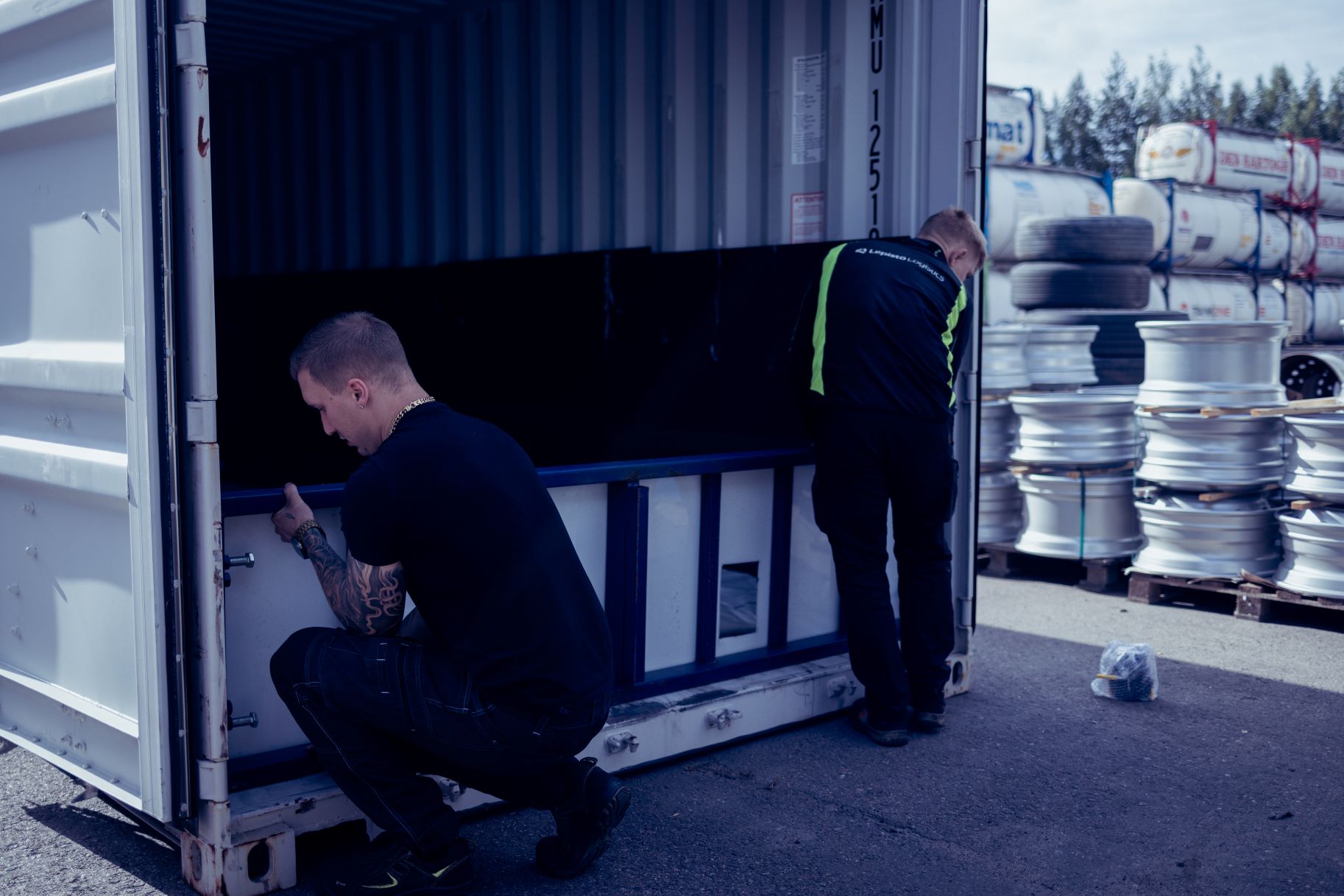
The flexitank liner is a direct material cost per shipment. Fitting the liner correctly requires a trained technician and access to a depot or fitting facility. We provide flexitank fitting and bulk liquid services through a nationwide depot network in Finland, which means you do not need to source fitting services separately. The quality of the liner affects both safety and your total cost, since a poor-quality liner that fails mid-transit creates far greater expenses than any upfront savings.
Freight and inland transport
Because flexitanks use standard dry containers, standard ocean freight rates apply rather than specialist tank-container rates. Inland transport on both the loading and delivery sides adds to the total. Temperature-controlled storage or cross-pumping, where needed, also contributes to the final figure. Recycling or disposal of the liner at destination is another line item to account for, though recycling programmes can reduce this cost.
What factors determine the cost of ISO tank transport?
ISO tank transport costs are shaped by the equipment lease or hire rate, ocean or intermodal freight, terminal handling at ports, cleaning and maintenance between cargoes, and inland trucking at both ends. Because ISO tanks are specialist equipment managed within a global pool, pricing reflects a comprehensive service rather than a simple container hire.
Equipment and operational costs
ISO tanks require cleaning between each cargo, and the cost of cleaning varies depending on the previous product carried and the requirements of the next cargo. Maintenance, inspection, and recertification are ongoing costs absorbed within the operator’s service model. When you work with an operator who manages tanks globally, these costs are built into a transparent overall price rather than appearing as unexpected line items.
Freight routing and repositioning
ISO tanks travel on specific intermodal and deep-sea routes, and the availability of equipment at your loading location affects both timing and cost. Operators with a strong global network and an extensive equipment base can optimise routing and reduce repositioning costs, which directly benefits your total freight spend. This is where the operating model of your logistics partner has a real impact on what you pay.
How do you calculate and compare the total cost of each option?
To compare flexitank and ISO tank costs fairly, calculate the total cost per tonne or per litre transported for each option, including all direct and indirect costs from origin to destination. A line-by-line comparison across the same route and volume gives you the most accurate picture.
For flexitanks, your total cost includes the liner, fitting, ocean freight for a standard 20-foot container, inland transport at both ends, any loading or unloading support, temperature-controlled storage if needed, and liner recycling or disposal. Divide that total by the volume shipped, up to 27,000 litres, to get your cost per litre.
For ISO tanks, your total cost includes the equipment hire or lease, ocean or intermodal freight, terminal handling fees, cleaning between cargoes, inland trucking at both ends, and any documentation or labelling requirements. Divide by the tank capacity to get a comparable cost-per-litre figure. Because ISO tank operators manage the full equipment lifecycle, some of these costs are consolidated into a single service rate, which makes comparison easier when you request a detailed quote.
The comparison only works when you use the same route, the same volume, and the same service scope. A flexitank quote that excludes inland transport is not comparable to an ISO tank quote that includes door-to-door delivery.
Which option is more cost-effective for your cargo type?
Flexitanks are generally more cost-effective for non-hazardous bulk liquids shipped in large volumes on high-frequency trade lanes, where standard container availability is strong and return logistics for specialist equipment would add cost. ISO tanks are more cost-effective for hazardous cargo, food-grade products requiring strict hygiene standards, gases, or any cargo that cannot be transported in a flexible liner.
If your cargo is non-hazardous and you are shipping on a lane with good container availability, the flexitank’s lower equipment cost and use of standard freight rates often make it the more economical choice per litre. The single-use nature of the liner also removes the return-logistics cost that comes with reusable equipment.
For chemicals, gases, or food-grade liquids with strict contamination requirements, ISO tanks are the appropriate and often more cost-effective solution over time. The durability and reusability of ISO tanks, combined with the managed global equipment pool, mean that complex or recurring shipments benefit from the consistency and reliability of a specialist operator. You avoid the risk and cost of cargo damage, contamination claims, or compliance failures that can arise from using the wrong container type.
What hidden costs should you watch out for when choosing?
The most common hidden costs in bulk liquid transport are demurrage and detention charges, cleaning costs that were not included in the original quote, liner disposal fees for flexitanks, and inland transport that was quoted separately or not quoted at all. These costs can significantly change the economics of your chosen solution.
- Demurrage and detention: ISO tanks held at the port or at your facility beyond the agreed free time generate daily charges. If your unloading process takes longer than expected, these fees add up quickly.
- Cleaning costs: For ISO tanks, the cost of cleaning between cargoes depends on the product and can vary widely. Always confirm whether cleaning is included in your quote or invoiced separately.
- Liner disposal or recycling: Flexitank liners need to be disposed of or recycled at destination. If this is not included in your logistics arrangement, it becomes an additional cost and a compliance responsibility.
- Inland transport exclusions: Quotes that cover only the ocean leg can look attractive until you add the full door-to-door cost. Always compare on a like-for-like basis.
- Documentation and labelling: For hazardous cargo in ISO tanks, regulatory documentation, labelling, and compliance requirements carry their own costs. These are worth confirming upfront.
The best way to avoid surprises is to request a fully itemised quote that covers the entire journey from the loading point to final delivery. A logistics partner who understands both flexitank and ISO tank operations can help you identify where costs are likely to appear and structure a solution that keeps your total spend predictable.
At Transitainer Shipping, we work with both flexitanks and ISO tanks, and we operate tank containers on a global scale. That means you do not need to manage equipment availability, scheduled routes, or the operational complexity of bulk liquid logistics yourself. We handle the full picture, from fitting and loading to delivery, cleaning, and documentation, so that the cost you see reflects the complete service.
Ready to compare options for your shipment?
If you want to find the most cost-effective solution for your specific cargo and route, reach out to our bulk liquid specialists and we will walk through the numbers with you. Getting the right container type from the start protects both your cargo and your budget.