When you’re moving bulk cargo across borders, one of the first decisions you’ll face is how to get it there. Should you ship directly by sea, or route it through an intermodal network? The answer shapes your costs, your timelines, and how much control you have over the journey. Understanding the difference between deep-sea and intermodal bulk cargo transport helps you make smarter decisions for your supply chain, whether you’re moving liquid chemicals, food-grade ingredients, or dry commodities.
This article breaks down both transport methods clearly, compares them side by side, and explains how each one works in practice for liquid and dry bulk cargo. If you’re evaluating your options for door-to-door bulk cargo logistics services, you’ll find everything you need here.
What is deep-sea bulk cargo transport?
Deep-sea bulk cargo transport is the movement of large volumes of cargo over long ocean routes, typically between continents. It uses ocean-going vessels to carry goods across major shipping lanes, covering distances that road or rail transport cannot reach. It forms the backbone of global trade for commodities like chemicals, oils, grains, and gases.
In a traditional deep-sea model, cargo moves from a port of origin to a destination port. The shipper is responsible for arranging collection and delivery at either end, which often means coordinating separate transport legs independently. For bulk cargo specifically, this can involve tankers, bulk carriers, or container vessels, depending on the cargo type and volume.
Deep-sea transport is well suited for high-volume, long-distance shipments where cost per unit is a priority. However, it typically requires more coordination between different service providers, and transit times can be longer when you factor in port handling, vessel schedules, and waiting times at terminals.
What is intermodal bulk cargo transport?
Intermodal bulk cargo transport is the movement of cargo using two or more transport modes, such as sea, road, and rail, within a single coordinated journey. The cargo stays in the same unit—typically an ISO tank container, a flexitank inside a standard container, or a bulk container—throughout the entire trip. This avoids the need to unload and reload between modes.
The intermodal approach is built around standardized equipment that transfers seamlessly between ships, trucks, and rail wagons. This makes it highly practical for bulk cargo moving from a factory in one country to a storage facility or production plant in another, without multiple handling steps that add time, cost, and the risk of contamination or damage.
Intermodal transport is particularly relevant for tank container transport in the Baltics and the Nordic region, where cargo often needs to travel by sea and then continue by road to reach an inland destination. The single-unit approach simplifies documentation, reduces handling, and gives you a cleaner chain of custody for sensitive cargo.
What is the difference between deep-sea and intermodal bulk cargo transport?
The main difference is scope and coordination. Deep-sea transport covers the ocean leg only, while intermodal transport covers the full journey from origin to destination using multiple connected modes. With deep-sea, you typically manage each transport leg separately. With intermodal, the entire route is planned and executed as one integrated service.
Coverage and responsibility
In a deep-sea arrangement, the shipping line takes responsibility for the cargo while it is at sea. Before and after the vessel journey, you need separate arrangements for trucking, terminal handling, and customs. In an intermodal setup, one coordinating party manages the full chain, which reduces gaps in responsibility and makes it easier to track your shipment.
Equipment and cargo handling
Deep-sea bulk transport can use a range of vessel types, including bulk carriers and tankers, where cargo is loaded directly into the ship’s holds or tanks. Intermodal transport relies on standardized units like ISO tank containers that can move across all transport modes without the cargo being transferred. This is a significant advantage for liquid and gas cargo, where every transfer point is a potential risk.
Flexibility and routing
Intermodal transport gives you more routing flexibility. If a port is congested or a direct vessel route is not available, the cargo can be rerouted via alternative combinations of sea, road, or rail without disrupting the shipment. Deep-sea transport is more dependent on fixed vessel schedules and port availability.
Which transport method is better for bulk cargo shipments?
Neither method is universally better. The right choice depends on your cargo type, volume, destination, and how much end-to-end control you need. For very high volumes moving between major ports, deep-sea transport can be the most cost-effective option. For cargo that needs to travel from a production site to an inland destination, intermodal transport is usually the more practical and efficient choice.
If your cargo is a liquid, gas, or dry bulk commodity that requires careful handling, temperature control, or strict hygiene standards, intermodal transport using ISO tanks or flexitanks offers clear advantages. The reduced number of handling steps lowers the risk of contamination, and the standardized equipment makes it easier to maintain quality throughout the journey.
For businesses shipping into or out of the Nordic and Baltic regions, intermodal solutions are often the default approach because direct deep-sea routes to inland destinations simply do not exist. The cargo arrives by sea and must continue by road or rail, making intermodal coordination not just convenient but necessary.
How does intermodal transport work for liquid and dry bulk cargo?
Intermodal transport for bulk cargo works by placing the cargo in a standardized container unit at the point of origin and moving that unit across different transport modes without unpacking or transferring the cargo. For liquid bulk, this typically means an ISO tank container or a flexitank fitted inside a standard 20-foot container. For dry bulk, liner bags or bulk containers are used.
Liquid bulk: ISO tanks and flexitanks
An ISO tank container is a cylindrical stainless steel tank mounted in a standard container frame. It can carry chemicals, food-grade liquids, gases, and other liquid cargo. Because it fits standard container dimensions, it moves seamlessly between ships, trucks, and rail wagons. A flexitank is a large flexible bladder installed inside a standard dry container, with a capacity of up to 27,000 litres. Flexitanks are a cost-effective flexitank transport solution for non-hazardous liquid cargo, offering a lower-cost alternative to ISO tanks for single-use shipments.
Dry bulk: containers and liner bags
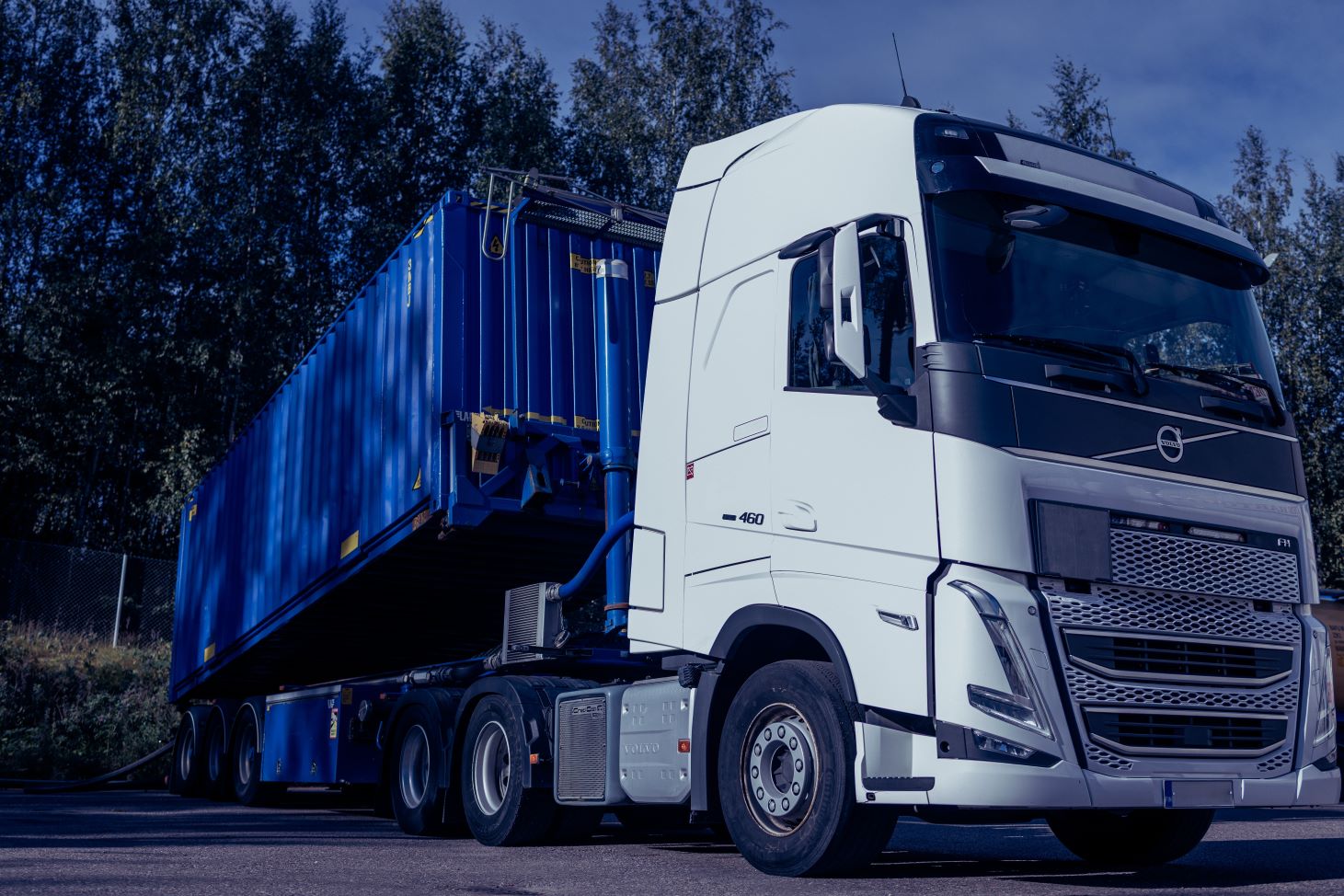
For dry bulk cargo transport services, intermodal solutions include standard containers fitted with liner bags for granules and powders, bulk containers, and silo containers for direct container-to-silo transfers. Tipping chassis allow efficient unloading at the destination, and rotary valve systems support SDU deliveries. The cargo stays protected inside the container throughout the journey, reducing exposure and the risk of contamination.
What are the main advantages of intermodal bulk cargo transport?
The main advantages of intermodal bulk cargo transport are reduced handling, better cargo integrity, end-to-end coordination, and routing flexibility. By keeping the cargo in a single unit from origin to destination, you minimize the number of touchpoints that can cause delays, damage, or contamination.
- Fewer handling steps: Cargo stays in the same container unit throughout the journey, reducing the risk of spills, contamination, or damage at transfer points.
- End-to-end visibility: A single coordinating party manages the full route, making it easier to track shipments and resolve issues quickly.
- Routing flexibility: Intermodal networks can adapt to port congestion, vessel availability, or changes in destination without disrupting the shipment.
- Suitable for sensitive cargo: ISO tanks and flexitanks maintain cargo quality for liquids, gases, and food-grade products across long, multi-mode journeys.
- Cost efficiency at scale: Standardized equipment and coordinated logistics reduce overhead compared to managing multiple separate transport legs.
- Access to inland destinations: Intermodal transport bridges the gap between deep-sea routes and final destinations that are not directly accessible by vessel.
For businesses that ship regularly into the Nordic and Baltic markets, intermodal transport also removes the burden of managing local trucking, terminal handling, documentation, and customs separately. When a logistics partner handles all of this as a single service, you save time and reduce the operational complexity of international bulk shipping.
At Transitainer Shipping, we operate tank containers globally, which means you don’t need to worry about scheduled routes or managing logistics yourself. Whether your cargo is a liquid chemical, a food-grade ingredient, or a dry bulk commodity, we provide door-to-door bulk cargo logistics services that cover every leg of the journey, from the production site to the final destination. We work with ISO tanks and flexitanks, managing the equipment ourselves to ensure consistent quality, optimized routing, and transparent pricing across the full service. If you’re looking for a reliable partner for intermodal or deep-sea bulk transport in the Nordics and Baltics, we’d be glad to help you find the right solution — reach out to our team to discuss your specific requirements.