Managing bulk cargo logistics across international borders brings real challenges. You need reliable transport options that adapt to different cargo types, handle complex customs procedures, and maintain quality standards throughout the journey. For logistics managers dealing with liquids, gases, and dry bulk materials, having the right shipping solutions makes the difference between smooth operations and constant headaches.
This article walks you through seven practical ISO tank shipping solutions that address common logistics challenges. You’ll learn how different transport options serve specific cargo needs, what operator-managed services bring to the table, and how comprehensive support simplifies international shipping.
Global tank container operations without route restrictions
When you work with operators who manage tank containers on a global scale, you don’t need to worry about scheduled routes or managing logistics yourself. This service model removes the burden of coordinating multiple transport legs, finding suitable equipment, or planning optimal routes across different regions.
The benefit comes from end-to-end handling of your bulk liquid shipments. From pickup to delivery, the operator manages the entire process, including intermodal connections, terminal handling, and documentation. This approach provides both efficiency and peace of mind, particularly for shipments moving through the Nordics, Baltics, and beyond.
For logistics managers, this means fewer moving parts to coordinate and more predictable delivery schedules. You get access to extensive equipment networks and established transport routes without maintaining your own tank fleet or managing complex logistics chains independently.
Choosing between flexitanks and ISO tanks for your cargo
Different cargo types need different transport solutions. ISO tank containers and flexitanks each serve specific requirements, and understanding which option suits your cargo helps you balance cost, safety, and operational efficiency.
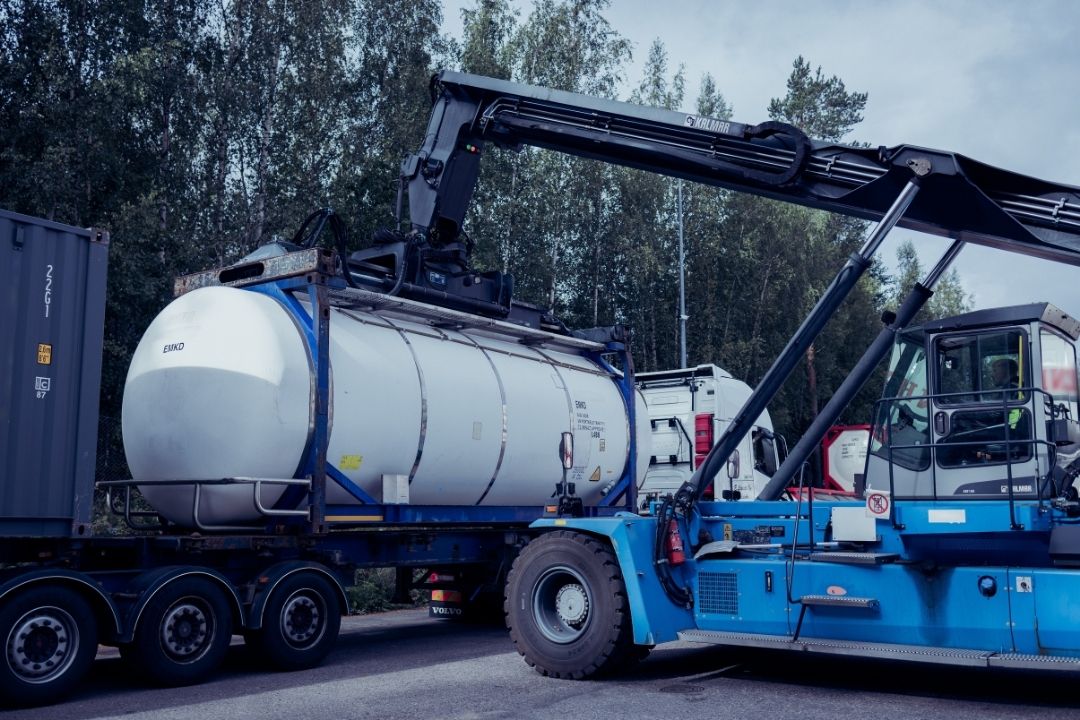
ISO tank containers work well for chemicals, food-grade liquids, high-heat cargo, and gases. These reusable containers provide robust protection and are suitable for hazardous materials requiring specialized handling. They’re particularly useful for regular shipments where you need consistent quality standards and temperature control.
Flexitanks offer a cost-efficient alternative for non-hazardous bulk liquids. Rather than focusing purely on technical specifications, the practical advantage lies in flexibility, reliability, and scalability. When operators manage both options, they can optimize transport routes, ensure consistent quality, and adapt quickly to your specific operational needs while keeping costs transparent.
End-to-end freight forwarding and customs support
International bulk cargo shipping involves more than just transport. You need comprehensive logistics support that covers sea freight, road transport, and intermodal connections, plus someone who handles the paperwork correctly.
Freight forwarding services designed for bulk cargo take care of complex shipping requirements across multiple transport modes. This includes coordinating container movements, booking space with shipping lines, and managing documentation throughout the journey.
Customs clearance for bulk shipments requires specific knowledge, particularly for chemicals and food-grade products. Having support from teams experienced with import and export procedures helps you avoid delays and compliance issues. This becomes particularly valuable when shipping to or from the Nordic and Baltic regions, where local expertise makes a real difference.
Specialized handling for liquid and gas cargo
Liquid and gas cargo needs careful handling throughout the transport chain. The right ISO tank container services ensure your shipments maintain quality standards and meet safety requirements from origin to destination.
Specialized handling covers several important areas. For chemicals, this means proper container selection, cleaning protocols, and documentation that meets regulatory standards. Food-grade liquids require hygienic transport conditions and containers that maintain product integrity. Gases need equipment designed for pressure management and temperature control.
Door-to-door solutions that combine technical expertise with operational reliability give you confidence that sensitive shipments receive proper care at every stage. This includes terminal handling, maintenance, labeling, and all the technical details that ensure safe, compliant transport.
Cost-efficient bulk liquid transport with flexitanks
For non-hazardous bulk liquids, flexitanks provide a reliable and affordable transport option. These single-use containers offer practical advantages for specific cargo types without the higher costs associated with tank containers.
A flexitank can hold up to 27,000 litres, making it suitable for substantial shipments of products like oils, syrups, and other non-hazardous liquids. The capacity balances affordability with operational efficiency, particularly for one-way shipments where returning empty equipment would add unnecessary cost.
Quality flexitank services include proper fitting through established depot networks, temperature-controlled storage when needed, and technical assistance throughout the process. Support for loading, unloading, and recycling programs adds value beyond just the container itself. When you work with providers who have partnerships with reliable shipping lines, you get competitive rates combined with dependable service.
Dry bulk logistics solutions for specialized commodities
Dry bulk materials like granules and powders need tailored transport solutions that protect product quality and handle the specific requirements of different industries. Chemical, agricultural, and food sector commodities each have distinct handling needs.
High-quality liner bags provide protection for food-grade and chemical granules during transport. The logistics solutions extend beyond just containers to include different delivery methods. Standard containers work for general cargo, while bulk and silo containers suit specific operational requirements.
Flexible inland transport options include tipping chassis for easy unloading, SDU deliveries using rotary valve systems, and container-to-silo transfers that streamline your receiving process. These specialized dry bulk handling options adapt to your facility setup and operational workflow, supported by technical expertise and recycling solutions that manage packaging materials responsibly.
Quality control through operator-managed tank solutions
When operators manage tank containers themselves rather than just brokering equipment, you get several practical benefits. The operator maintains direct control over equipment quality, cleaning standards, and maintenance schedules.
This management approach allows for optimized transport routes based on actual equipment location and availability. Operators can adapt quickly to your changing needs because they control the assets and have established networks for different regions and cargo types.
The cost structure becomes more transparent when it’s aligned with comprehensive service provision. You’re not paying separately for equipment rental, logistics coordination, and various handling services. Instead, pricing reflects the complete service package, making budgeting more straightforward.
For logistics managers, not having to manage tank logistics independently means fewer supplier relationships to coordinate and less time spent on equipment sourcing. You work with one partner who handles the technical and operational details, letting you focus on your core business activities.
These seven ISO tank shipping solutions address the real challenges logistics managers face when moving bulk cargo internationally. From global operations that eliminate route restrictions to specialized handling for different cargo types, having access to comprehensive tank container and bulk logistics services simplifies your work. At Transitainer Shipping, we provide these solutions across the Nordics, Baltics, and globally, combining local expertise with international reach. Our operator-managed approach to tank containers, flexitanks, and dry bulk logistics gives you the reliability and flexibility your operations need. To discuss your specific shipping requirements, contact our logistics team today.